


Marketing Attribution Case Study: Unlocking True ROI with Data-Driven Insights
Platform Category: Marketing Analytics Platform
Core Technology/Architecture: Centralized Data Warehouse for Multi-Touch Attribution (MTA)
Key Data Governance Feature: Identity Resolution
Primary AI/ML Integration: Algorithmic Attribution Modeling
Main Competitors/Alternatives: Google Analytics, Adobe Analytics, Ruler Analytics, Rockerbox
This comprehensive Marketing Attribution Case Study reveals how businesses can truly understand the effectiveness of their marketing campaigns and unlock their true return on investment (ROI). It delves into the methodologies and tangible benefits of advanced attribution, highlighting how data-driven insights are crucial for optimizing marketing spend and maximizing returns. For any organization aiming to move beyond superficial metrics, embracing a sophisticated approach to Marketing Attribution is no longer optional; it’s a strategic imperative.
Introduction: The Challenge of Unlocking True Marketing ROI
In today’s complex digital landscape, understanding the true impact of marketing efforts has become increasingly challenging. Traditional, simplistic attribution models, such as first-click or last-click, often misrepresent the genuine contribution of various touchpoints in a customer’s journey. This analytical blind spot leads to inefficient budgeting, suboptimal campaign performance, and ultimately, wasted resources that hinder true business growth. Without a precise understanding of which channels and interactions are truly driving conversions, marketers are left guessing, unable to confidently allocate their budgets for maximum effect.
Businesses frequently struggle to identify the precise contribution of each touchpoint across the often winding path a customer takes before making a purchase. This significant analytical gap prevents optimal campaign adjustments, limiting their ability to discover and realize true ROI. This Marketing Attribution Case Study aims to demystify advanced attribution techniques, demonstrating how a robust, data-driven approach can transform marketing measurement from an art into a precise science, thereby empowering organizations to achieve unparalleled efficiency and profitability.
Core Breakdown: Architecting Precision in Marketing Attribution
Implementing a sophisticated marketing attribution framework requires a foundational shift in how marketing data is collected, processed, and analyzed. The cornerstone of such a system is a centralized data warehouse, designed to ingest and consolidate data from every conceivable marketing touchpoint and customer interaction. This unified data repository is essential for creating a holistic view of the customer journey, moving beyond the siloed data typically found in individual marketing platforms.
Components and Technical Analysis of a Modern Attribution Platform:
- Centralized Data Warehouse: This serves as the single source of truth, integrating raw event data from diverse sources such as CRM systems, advertising platforms (Google Ads, Facebook Ads, LinkedIn), web analytics (Google Analytics, Adobe Analytics), email marketing platforms, social media, and offline interactions. The ability to store large volumes of granular, timestamped data is paramount.
- Data Integration & ETL Pipelines: Robust Extract, Transform, Load (ETL) processes are critical for cleaning, structuring, and harmonizing disparate datasets. This ensures data quality and consistency, making it suitable for analysis and modeling.
- Identity Resolution: A key data governance feature, identity resolution is the process of stitching together individual customer interactions across various devices and channels to form a complete, consistent customer profile. This involves using techniques like cookie matching, device IDs, email hashing, and probabilistic matching to link anonymous touchpoints to known customer identities, providing a true 360-degree view of the customer journey.
- Multi-Touch Attribution (MTA) Models: This is where the core analytics reside. MTA models go beyond simplistic single-touch approaches by distributing credit across multiple interactions.
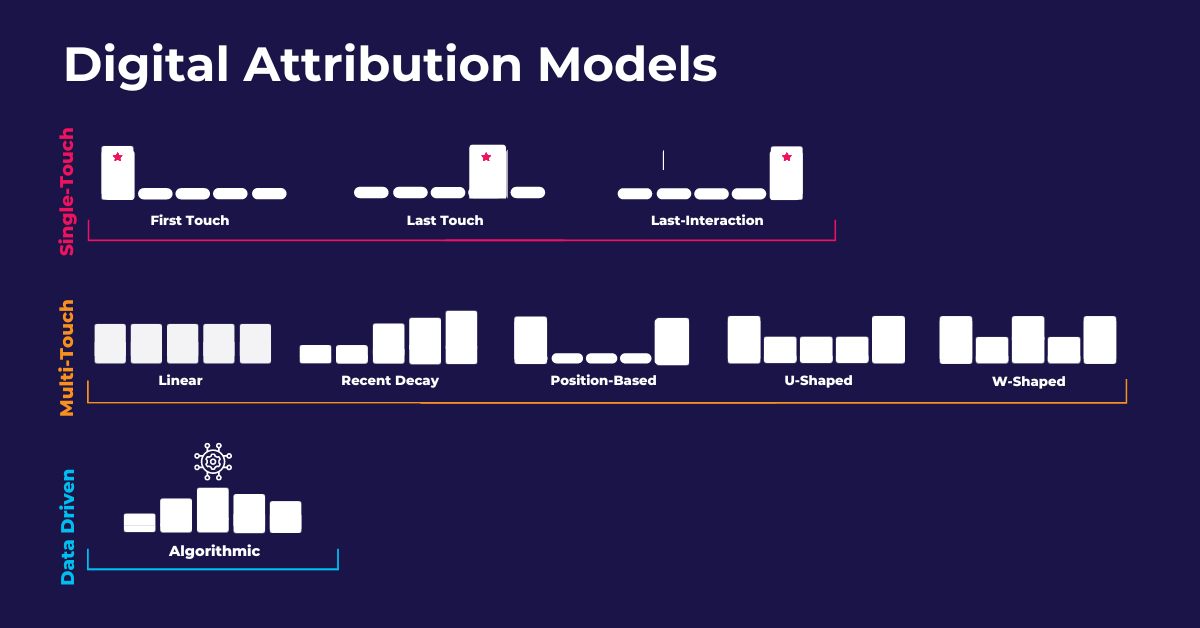
- Rule-Based Models: While still more advanced than single-touch, these rely on predefined rules (e.g., linear, time decay, U-shaped, W-shaped) to assign credit. They are easier to understand but may not fully capture the nuance of influence.
- Algorithmic Attribution Modeling (AI/ML Integration): This represents the pinnacle of attribution. Machine learning models (e.g., Shapley value, Markov chains, logistic regression, neural networks) analyze vast datasets to determine the true incremental impact of each touchpoint. These models learn from historical data to understand complex causal relationships, providing a much more accurate and unbiased distribution of credit. They can identify hidden synergies and interdependencies between channels that rule-based models often miss.
- Reporting & Visualization Layer: User-friendly dashboards and reporting tools are vital for marketers to interpret complex attribution data, identify trends, and derive actionable insights without needing deep technical expertise.
Challenges and Barriers to Adoption:
While the benefits of advanced attribution are clear, organizations face several hurdles in its implementation:
- Data Silos and Integration Complexity: The biggest challenge is often integrating data from numerous disparate sources, each with its own format and API limitations. Creating a unified, clean dataset requires significant technical effort and robust ETL processes.
- Data Quality and Consistency: Inaccurate tracking, missing data, duplicate entries, or inconsistent labeling across platforms can severely compromise the accuracy of attribution models. Ensuring high data quality from the outset is paramount.
- Model Complexity and Interpretation: Algorithmic attribution models can be black boxes, making it difficult for marketers to understand “why” credit was assigned in a certain way. Building trust in these models and educating stakeholders on their value is crucial.
- Organizational Buy-in and Cultural Shift: Moving away from familiar, albeit flawed, last-click models often meets resistance. It requires a cultural shift towards data-driven decision-making and a willingness to challenge established beliefs about marketing effectiveness.
- Privacy Concerns and Regulatory Compliance: Evolving data privacy regulations (GDPR, CCPA) impact data collection, identity resolution, and the ability to track users across their journey, adding complexity to attribution efforts.
Business Value and ROI from Advanced Attribution:
Despite the challenges, the business value derived from implementing a sophisticated Marketing Attribution Case Study approach is substantial, leading to tangible ROI:
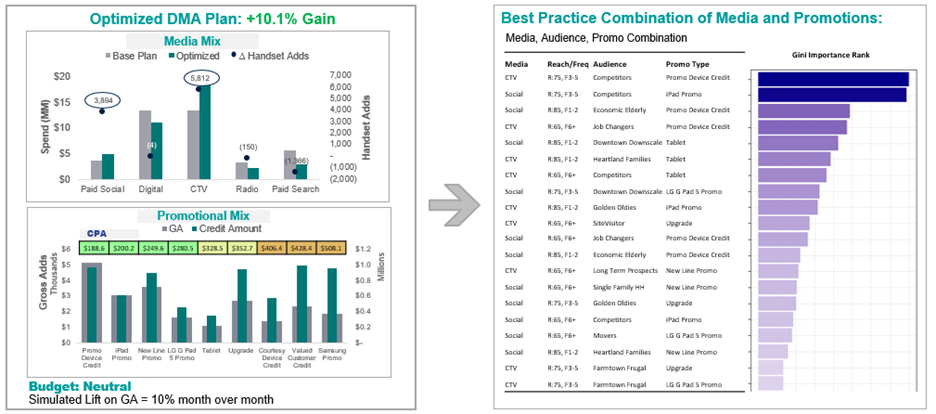
- Optimized Marketing Spend: Precision in understanding touchpoint contributions allows for strategic budget reallocation, shifting investments from underperforming channels to those with the highest incremental impact. This ensures every marketing dollar works harder.
- Granular Campaign Insights: Marketers gain deep insights into the performance of individual campaigns, ad creatives, keywords, and audience segments, enabling continuous optimization at a micro-level.
- Improved Customer Journey Understanding: A comprehensive view of the customer journey facilitates better personalization, allowing businesses to tailor messaging and offers based on where a customer is in their decision-making process.
- Enhanced Predictive Capabilities: Algorithmic models can forecast the potential ROI of future campaigns, helping marketers make proactive, data-informed decisions about channel mix and budget allocation.
- Increased Accountability and Transparency: Advanced attribution provides clear, measurable ROI for marketing efforts, fostering internal accountability and justifying marketing investments to stakeholders. This leads to better financial results and a stronger market position.
Comparative Insight: Beyond the Last Click – Advanced Attribution vs. Traditional Models
The evolution of marketing attribution mirrors the increasing complexity of the customer journey itself. For decades, marketers largely relied on simplistic, single-touch attribution models due to technological limitations and the nascent stage of digital marketing. Understanding the stark contrast between these traditional approaches and modern, data-driven multi-touch attribution (MTA) platforms is critical for appreciating the true value proposition of the latter.
Traditional Attribution Models: The Limitations
Traditional models, such as last-click, first-click, or even simple linear models, offer a fragmented and often misleading view of marketing effectiveness:
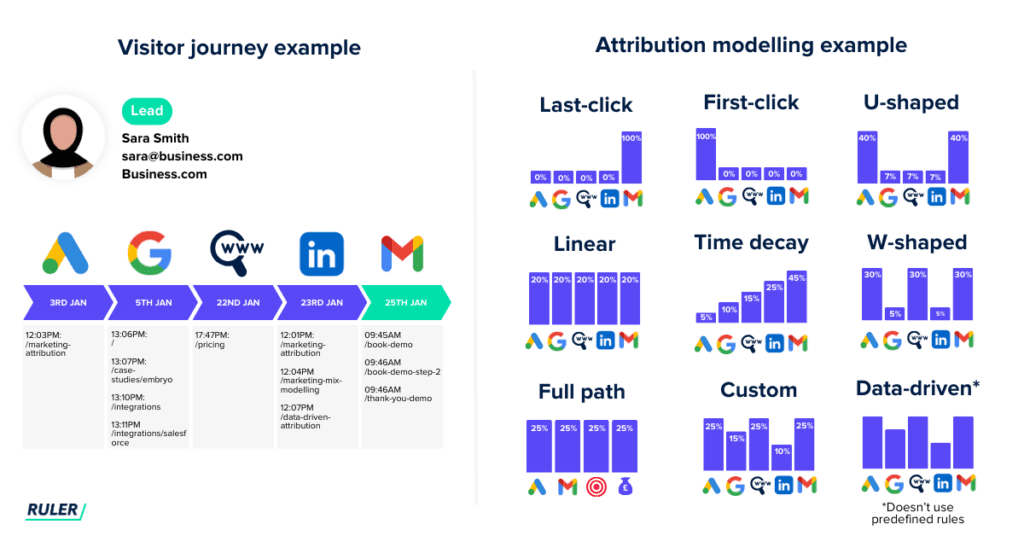
- Last-Click Attribution: This model assigns 100% of the credit for a conversion to the very last marketing touchpoint the customer interacted with before converting. While easy to implement and understand, it completely ignores all preceding interactions that might have influenced the customer’s decision, often leading to over-investment in bottom-of-funnel tactics and neglecting brand-building or awareness efforts.
- First-Click Attribution: Conversely, this model gives all credit to the first touchpoint. It’s useful for understanding what introduced a customer to your brand but fails to acknowledge any subsequent nurturing or conversion-driving activities.
- Linear Attribution: This model distributes credit equally across all touchpoints in the customer journey. While an improvement over single-touch models, it still assumes all interactions have the same weight, which is rarely true in reality.
- Time Decay Attribution: This model assigns more credit to touchpoints closer in time to the conversion. It’s a step towards recognizing recency but still relies on arbitrary rules rather than actual impact.
The fundamental flaw in these traditional models is their inherent oversimplification. They operate on predefined rules rather than actual data-driven insights into customer behavior. This means they cannot accurately capture the complex interplay and synergistic effects between different marketing channels, often leading to misinformed budget allocations and a skewed understanding of true ROI.
Advanced Multi-Touch Attribution (MTA) Platforms: The Evolution
Modern MTA platforms, as explored in this Marketing Attribution Case Study, leverage centralized data warehouses, robust identity resolution, and sophisticated AI/ML algorithms to overcome the limitations of traditional models. Instead of relying on rigid rules, they analyze vast datasets to model the true incremental impact of each touchpoint.
- Holistic Customer Journey View: MTA platforms stitch together interactions across all online and offline channels, providing an unprecedented 360-degree view of the customer’s path to conversion. This allows marketers to see the “big picture” rather than just isolated events.
- Data-Driven Credit Distribution: Utilizing algorithmic attribution modeling (e.g., Shapley Value, Markov Chains), these platforms statistically determine the true value of each touchpoint based on its contribution to conversion probability. This moves beyond arbitrary rules to provide an objective, data-backed distribution of credit.
- Identification of Synergies: Advanced models can uncover how different channels influence each other. For example, a display ad might not directly lead to a conversion, but it might significantly increase the likelihood of a customer engaging with a search ad later on. MTA reveals these critical, often hidden, synergies.
- Optimization for Incremental Value: The goal is to optimize for incremental ROI. MTA helps identify channels that generate the most *additional* conversions, rather than just being present in a journey that would have happened anyway.
Data Lake/Warehouse vs. Dedicated Attribution Platform
It’s important to distinguish between a general-purpose data lake or data warehouse and a dedicated marketing attribution platform. While a data lake/warehouse provides the foundational infrastructure for storing raw marketing and customer data, it doesn’t inherently perform the complex attribution modeling. A dedicated attribution platform:
- Specialized ETL and Data Models: It features pre-built connectors and schemas optimized for marketing data, streamlining the integration of diverse sources.
- Proprietary Algorithms: Contains sophisticated, often proprietary, machine learning algorithms specifically designed for attribution modeling, identity resolution, and customer journey mapping.
- Marketing-Specific UI/UX: Offers dashboards and reports tailored for marketers, translating complex data into actionable insights relevant to campaign optimization, unlike a generic BI tool.
- Focus on Incremental ROI: The entire architecture and methodology are geared towards answering specific marketing performance questions and driving optimal marketing spend, making it a specialized layer on top of, or integrated with, a broader data infrastructure.
In essence, while a robust data foundation (like a data warehouse) is a prerequisite, a specialized marketing attribution platform adds the intelligence layer that transforms raw data into actionable insights for optimizing Marketing Attribution and achieving true ROI.
World2Data Verdict: The Imperative for Integrated Attribution Intelligence
The verdict from World2Data is unequivocal: in an increasingly fragmented and data-rich marketing ecosystem, the adoption of advanced, data-driven marketing attribution is no longer a competitive advantage but a fundamental necessity for survival and growth. Organizations that continue to rely on outdated, simplistic attribution models risk making suboptimal investment decisions, misinterpreting campaign performance, and ultimately leaving significant ROI on the table.
Our analysis within this Marketing Attribution Case Study clearly demonstrates that investing in a robust attribution platform, underpinned by a centralized data warehouse, sophisticated identity resolution, and algorithmic attribution modeling, yields measurable returns through optimized marketing spend, deeper customer understanding, and enhanced predictive capabilities. The path to unlocking true ROI is paved with precision data analytics, requiring a commitment to integrating disparate data sources and embracing advanced machine learning techniques.
For businesses looking ahead, the future of Marketing Attribution will be defined by even greater real-time capabilities, hyper-personalization driven by granular attribution insights, and seamless integration with broader business intelligence platforms. We recommend that companies initiate or accelerate their journey towards full multi-touch attribution by: (1) investing in a scalable data infrastructure capable of consolidating all customer interaction data, (2) prioritizing identity resolution to unify customer profiles, and (3) exploring AI/ML-driven attribution models that can truly quantify the incremental impact of every touchpoint. The time to move beyond the last click and embrace a comprehensive, data-driven approach to marketing effectiveness is now.