


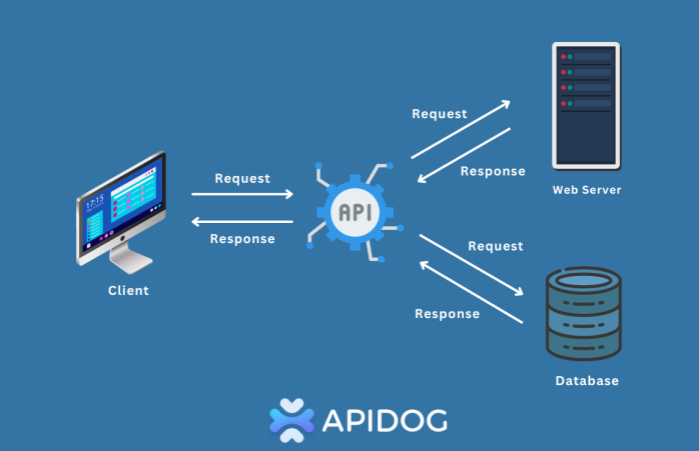
API Data Access: The Fastest Way to Deliver Real-Time Information for Modern Enterprises
Platform Overview:
- Platform Category: API Management and Real-time Data Delivery Platforms
- Core Technology/Architecture: RESTful and GraphQL APIs, Event-Driven Architecture, Streaming Data Pipelines
- Key Data Governance Feature: API Security (OAuth, API Keys), Role-Based Access Control for API endpoints, API Gateway policies, Audit logging
- Primary AI/ML Integration: Real-time Model Inference, Feature Store Integration for immediate feature access, MLOps for model serving via APIs
- Main Competitors/Alternatives: Batch ETL processing, Direct Database Access, File-based Data Transfer, Traditional Data Warehousing without API layer
In today’s hyper-connected world, the ability to instantly tap into vast oceans of data is no longer a luxury but a fundamental necessity. Effective API Data Access transforms raw information into actionable insights at unparalleled speed, driving crucial decisions and enhancing operational agility across every sector. For organizations striving for competitive advantage and data-driven innovation, mastering the art of real-time data delivery through APIs is paramount. This deep dive will explore the architectural underpinnings, immense business value, and strategic imperatives of robust API Data Access frameworks.
Introduction: The Imperative for Real-Time Data
The digital economy thrives on speed and responsiveness. From personalized customer experiences to dynamic supply chain optimization and immediate financial trading, the demand for information at the moment it’s needed has never been higher. Traditional batch processing methods, while still valuable for historical analysis and large-scale data warehousing, often fall short when milliseconds matter. This is where API Data Access emerges as a critical enabler. It provides a standardized, secure, and highly efficient mechanism for applications, services, and users to consume data as it’s generated, fostering an environment of perpetual insight and instant action. This article aims to dissect the pivotal role of API-driven data strategies, highlighting their architectural nuances, economic benefits, and how they stack against conventional data access paradigms.
Core Breakdown: Architecture and Capabilities of API Data Access
API Data Access fundamentally redefines how businesses acquire and leverage critical information. It enables immediate information exchange between disparate systems, cutting down delays and fostering a truly integrated environment. This real-time flow streamlines complex operations, from inventory management to customer relationship handling, ensuring departments operate with current data.
Architectural Deep Dive: Powering Real-Time Delivery
At the heart of modern API Data Access solutions are sophisticated architectural patterns designed for speed, scalability, and reliability. These typically encompass:
- RESTful APIs: The ubiquitous standard for web services, REST APIs offer a stateless, client-server communication model that is easy to understand and implement. They are ideal for requesting specific data resources and performing CRUD (Create, Read, Update, Delete) operations.
- GraphQL APIs: Offering a more flexible and efficient alternative, GraphQL allows clients to request exactly the data they need, reducing over-fetching or under-fetching. A single endpoint can serve complex queries, making it highly effective for applications with diverse data requirements.
- Event-Driven Architecture (EDA): Beyond simple request-response, EDA focuses on detecting, reacting to, and propagating events. Technologies like Apache Kafka, RabbitMQ, or Amazon Kinesis enable asynchronous communication, where data changes (events) are published and subscribed to, facilitating immediate updates across systems without direct coupling.
- Streaming Data Pipelines: Platforms like Apache Flink, Spark Streaming, or Google Cloud Dataflow process continuous streams of data in real-time. When combined with APIs, these pipelines can serve processed, enriched, or aggregated data instantly, enabling live dashboards, real-time analytics, and immediate model inference.
These core technologies, often orchestrated by API Gateways, microservices, and data virtualization layers, form a robust infrastructure capable of delivering data with minimal latency and maximum availability.
Data Governance and Security for API Endpoints
While speed is crucial, security and governance are non-negotiable for API Data Access. Robust frameworks incorporate:
- API Security: Implementing industry standards like OAuth 2.0 for token-based authentication and authorization, along with API Keys for client identification, ensures only authorized applications and users can access data.
- Role-Based Access Control (RBAC): Granular permissions define what data specific roles can access via particular API endpoints, preventing unauthorized data exposure.
- API Gateway Policies: API Gateways act as a frontline, enforcing policies for throttling, rate limiting, IP whitelisting/blacklisting, and encryption (TLS/SSL) to protect against attacks and manage resource consumption.
- Audit Logging: Comprehensive logging of all API calls, data accessed, and user identities provides an immutable record for compliance, troubleshooting, and security monitoring.
Primary AI/ML Integration: Fueling Intelligent Systems
The true power of API Data Access lies in its capacity to deliver insights as events unfold. This dynamic access allows organizations to make swift, informed decisions that adapt to rapidly changing market conditions or customer behaviors. Gaining a competitive edge often hinges on speed, and robust API Data Access provides that crucial acceleration, turning data into decisive action points instantly. For AI and Machine Learning, APIs are indispensable:
- Real-time Model Inference: APIs serve as the conduit for delivering fresh, streaming data to pre-trained ML models for immediate predictions. Whether it’s fraud detection, recommendation engines, or predictive maintenance, real-time data via APIs is critical for relevant and timely outputs.
- Feature Store Integration: A Feature Store centralizes and manages curated features for ML models. APIs provide immediate, low-latency access to these features, ensuring consistency between training and inference environments and accelerating model development and deployment.
- MLOps for Model Serving via APIs: MLOps pipelines leverage APIs to deploy, monitor, and manage ML models in production. Models are exposed as API endpoints, allowing applications to easily consume their predictions, facilitating continuous integration and continuous delivery (CI/CD) of AI.
Challenges and Barriers to Adoption
Despite its advantages, implementing effective API Data Access comes with its own set of hurdles:
- Latency and Performance Management: While aiming for real-time, network latency, inefficient API design, or underlying data source performance can degrade the user experience. Optimizing payload sizes, caching strategies, and efficient query design are paramount.
- API Versioning and Compatibility: As data models and business requirements evolve, APIs must change. Managing multiple API versions gracefully without breaking consumer applications requires careful planning and communication.
- Security Vulnerabilities: Poorly secured APIs are a prime target for cyberattacks. The risk of data breaches, denial-of-service attacks, and unauthorized access is constant, necessitating continuous vigilance and adherence to best practices.
- Data Consistency and Integrity: When drawing data from multiple, potentially inconsistent sources, ensuring data quality and integrity through APIs can be challenging. Robust data validation and synchronization mechanisms are essential.
- MLOps Complexity: Integrating real-time data feeds with complex MLOps pipelines for continuous training and serving adds layers of operational complexity, demanding specialized skills and robust automation.
- Discoverability and Documentation: A vast array of APIs is useless if developers cannot easily find, understand, and use them. Comprehensive documentation, developer portals, and clear API contracts are vital.
Business Value and ROI of API Data Access
Investing in superior API Data Access is a strategic move towards a future-proof enterprise. It provides the flexibility to quickly integrate new technologies and adapt to evolving business models and customer expectations. By fostering data fluidity, API Data Access becomes a catalyst for continuous innovation, enabling businesses to lead their industries with agility. This constant flow of relevant information keeps businesses ahead of the digital landscape. The returns on investment are significant:
- Accelerated Time-to-Market: Faster development and deployment of new applications, products, and services by providing developers with immediate access to necessary data.
- Enhanced Customer Experience: Delivering personalized content, real-time recommendations, and seamless application interactions that significantly boost user engagement and satisfaction.
- Operational Efficiency: Automating workflows, enabling predictive analytics for resource allocation, and reducing manual interventions across departments, leading to significant cost savings.
- Improved Decision-Making: Empowering business leaders with real-time insights to react proactively to market changes, identify opportunities, and mitigate risks.
- Data Monetization: Creating new revenue streams by securely exposing curated data sets or functionalities via APIs to partners or third-party developers.
- Driving Innovation Forward: Fostering an ecosystem of innovation by enabling easy integration with emerging technologies and facilitating collaborative development.
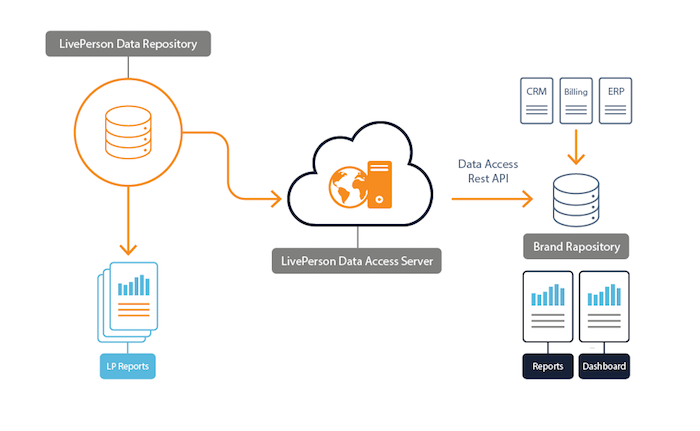
Comparative Insight: API Data Access vs. Traditional Approaches
Understanding the distinct advantages of API Data Access becomes clearer when compared to its traditional counterparts:
- Batch ETL Processing: While crucial for historical reporting and large-scale data transformation, batch ETL (Extract, Transform, Load) operates on scheduled intervals, leading to data latency. API Data Access, conversely, offers instant, on-demand data retrieval and pushes real-time events, making it unsuitable for scenarios requiring immediate action.
- Direct Database Access: Exposing databases directly to external applications poses significant security risks, creates tight coupling between the application and the database schema, and limits scalability. APIs provide an abstraction layer, encapsulating data logic, enforcing security, and allowing for schema changes without impacting consumers.
- File-based Data Transfer: Relying on SFTP, CSVs, or other file formats for data exchange is often manual, prone to errors, and inherently not real-time. It lacks validation, security, and immediate feedback mechanisms that APIs inherently offer.
- Traditional Data Warehousing without API Layer: Data warehouses are optimized for complex analytical queries over historical data. While powerful, accessing data from them typically involves slow query execution or batch exports. Without a dedicated API layer, extracting specific, real-time operational data quickly can be cumbersome, leading to outdated insights in fast-moving environments.
API Data Access complements these existing systems rather than entirely replacing them. It acts as an agile, real-time interface on top of underlying data stores, providing a modern conduit for data flow that traditional methods cannot match in terms of speed, flexibility, and security. It essentially modernizes and democratizes data access within and beyond the enterprise perimeter.
World2Data Verdict: The Unstoppable Momentum of API-First Data Strategies
The trajectory towards an API-first approach for data access is not merely a trend; it is a fundamental shift in how organizations perceive and utilize their most valuable asset – data. World2Data.com asserts that robust API Data Access is no longer a competitive differentiator but a baseline requirement for any enterprise aiming for digital leadership and sustained innovation. The ability to abstract complex data sources, provide secure and governed access, and deliver information in real-time empowers businesses to build more responsive applications, fuel cutting-edge AI/ML initiatives, and foster vibrant partner ecosystems. Enterprises must prioritize investment in scalable API management platforms, adopt event-driven architectures, and cultivate an API-centric culture to truly unlock the potential of their data. The future belongs to those who can deliver the right information, at the right time, to the right place, and API Data Access is undeniably the fastest and most effective way to achieve this.