

Data-as-a-Service (DaaS): A Complete 2025 Guide for Enterprise Data Strategy
Data-as-a-Service (DaaS) offers vital insights into leveraging external and internal datasets without the overhead of infrastructure management. As we approach a data-intensive 2025 landscape, DaaS empowers organizations to access high-quality, pre-processed data ready for immediate consumption, democratizing valuable information access and streamlining analytical workflows. This strategic approach transforms how businesses consume and integrate data, providing a scalable, on-demand solution for diverse operational and analytical needs. World2Data explores the multifaceted impact of Data-as-a-Service on modern data ecosystems.
Understanding Data-as-a-Service in 2025
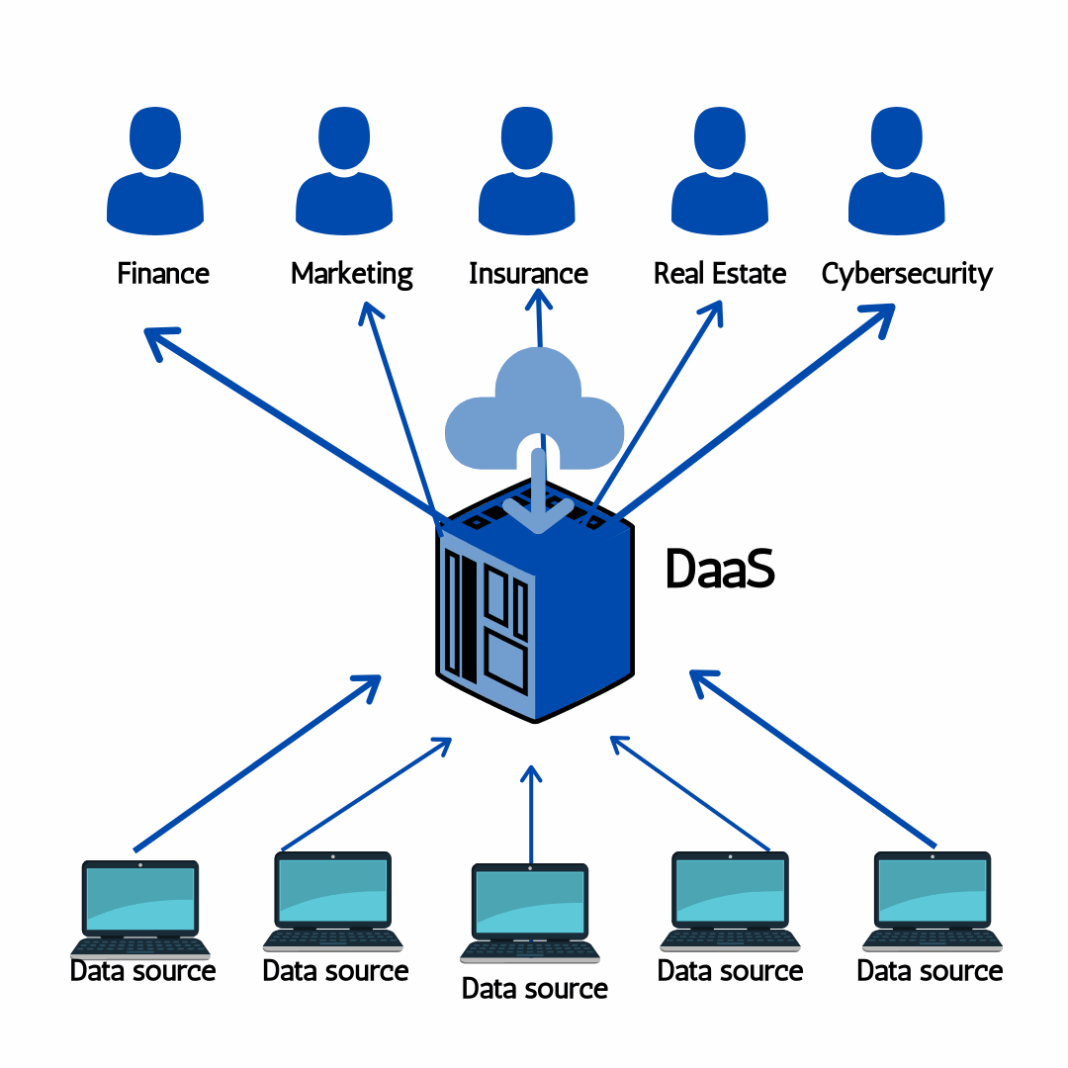
The year 2025 marks a critical juncture for enterprise data strategy, with Data-as-a-Service (DaaS) emerging as a cornerstone for agile and competitive organizations. DaaS fundamentally transforms how businesses acquire and utilize data, moving from siloed internal efforts to a scalable, subscription-based model. At its core, DaaS represents a Platform Category focused squarely on Data Provisioning Service. It provides curated data streams, delivering specific, often real-time, information directly to applications or platforms. This ensures businesses remain agile and competitive by having relevant, up-to-date Data-as-a-Service at their fingertips, alleviating the burdens of data infrastructure management and maintenance.
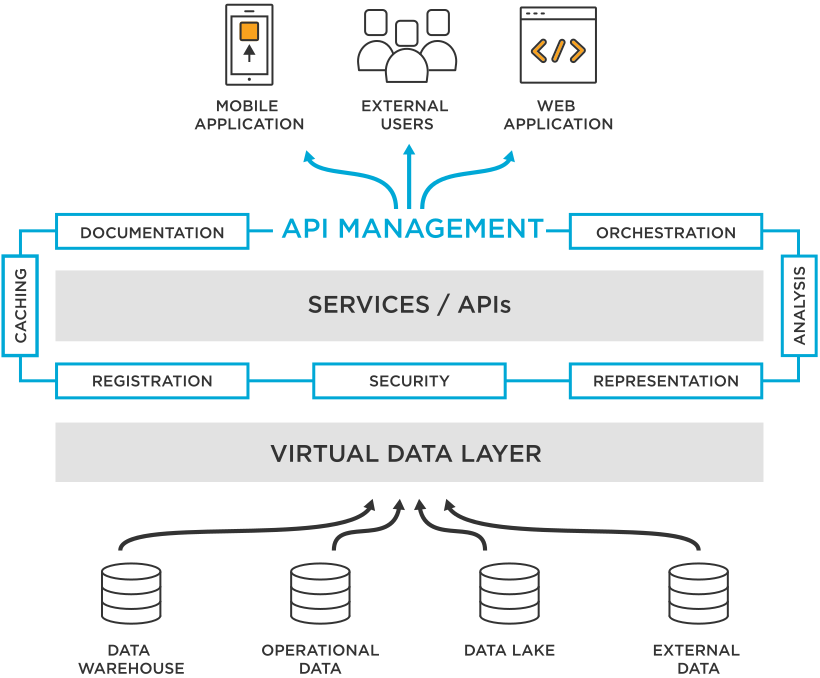
The technological backbone of modern Data-as-a-Service is robust and sophisticated. It predominantly relies on an API-driven architecture, enabling seamless integration with existing enterprise systems, analytics platforms, and Machine Learning pipelines. Cloud-native principles are central to its design, ensuring scalability, elasticity, and global accessibility, allowing businesses to consume data from anywhere, at any time. Furthermore, advanced DaaS offerings leverage Data Virtualization technologies, presenting a unified view of disparate data sources without physical consolidation. This is often underpinned by a Microservices architecture, which provides flexibility, resilience, and independent scalability of various data services, from data ingestion to transformation and delivery. This comprehensive technological stack ensures that Data-as-a-Service is not just about data delivery, but about intelligent, efficient, and secure data access.
Core Breakdown: Architecture, Features, Challenges, and Value of Data-as-a-Service
A deep dive into Data-as-a-Service reveals a sophisticated ecosystem designed to streamline data consumption and maximize its utility. Its architectural paradigm shifts the focus from owning data infrastructure to consuming data products, making it a critical component for data-driven innovation in 2025.
Key Benefits of Adopting DaaS Solutions
The advantages of DaaS are manifold, starting with unparalleled data accessibility. Data-as-a-Service breaks down traditional barriers, allowing diverse departments to tap into consistent, up-to-date data without the need for complex ETL processes or data pipeline management. This significantly reduces operational burdens associated with data collection, cleaning, and maintenance, freeing up internal IT resources for core business innovation and strategic initiatives. By outsourcing these tasks to specialized DaaS providers, organizations can reduce Total Cost of Ownership (TCO) associated with data infrastructure, software licenses, and specialized personnel. The immediate availability of high-quality, often real-time, data accelerates decision-making processes, leading to more responsive business operations and improved customer experiences. Moreover, DaaS fosters data democratization, empowering business users and analysts to self-serve their data needs, thereby accelerating time-to-insight and fostering a culture of data literacy.
Core Features to Look for in DaaS Providers
When evaluating Data-as-a-Service offerings, prioritizing robust data quality and governance frameworks is paramount. A reliable DaaS provider ensures data accuracy, consistency, and compliance with regulatory standards such as GDPR, CCPA, and industry-specific regulations. Key Data Governance Features include comprehensive Metadata Management, providing clarity on data origin, lineage, and definitions; stringent Data Quality Management processes to cleanse, validate, and enrich data; and granular Access Control mechanisms to ensure only authorized users and applications can access specific datasets, adhering to the principle of least privilege. Seamless integration capabilities through well-documented APIs are also crucial for embedding Data-as-a-Service effectively into existing systems, applications, and analytics platforms. Furthermore, stringent security and privacy protocols, including encryption in transit and at rest, multi-factor authentication, and regular security audits, are essential to protect sensitive information delivered via DaaS. For organizations leveraging AI and Machine Learning, Primary AI/ML Integration is a significant advantage; DaaS platforms can supply curated, pre-processed data specifically optimized for ML model training, and some even incorporate AI-driven data quality checks to proactively identify and rectify anomalies, ensuring the reliability of data fed into AI systems.
Challenges and Barriers to DaaS Adoption
While the promise of Data-as-a-Service is compelling, organizations must also be aware of potential challenges and barriers to adoption. One significant hurdle is data integration complexity. Although DaaS aims to simplify data access, integrating external DaaS streams with internal legacy systems can still pose challenges, requiring robust API management and data orchestration layers. Vendor lock-in is another concern; relying heavily on a single DaaS provider could limit flexibility and increase switching costs down the line. Data governance and compliance become more complex when data originates from third-party sources. Ensuring that a DaaS provider’s data handling practices align with an organization’s internal policies and regulatory obligations requires meticulous due diligence and robust contractual agreements. Security and privacy remain paramount, especially when dealing with sensitive or personal data; organizations must thoroughly vet the security posture of their DaaS providers. Finally, managing data quality assurance from external DaaS providers can be tricky; while providers promise high quality, organizations need mechanisms to validate this quality continuously to prevent issues like data drift or inconsistency from impacting their analytics and AI models.
Business Value and ROI of Data-as-a-Service
The return on investment (ROI) from adopting Data-as-a-Service is multifaceted and profound. By significantly reducing the effort and cost associated with data acquisition, cleaning, and preparation, DaaS leads to a lower Total Cost of Ownership (TCO) for data infrastructure and operations. It accelerates time-to-market for new data products and services, as development teams can access ready-to-use data rather than building pipelines from scratch. For AI and Machine Learning initiatives, DaaS provides access to high-quality, diverse datasets, which are crucial for training more accurate and robust models. This translates to faster model deployment and improved predictive capabilities. The enhanced data quality for AI, coupled with the ability to integrate real-time external data, enables organizations to make more informed and timely decisions, driving competitive advantage. In sectors like marketing, DaaS fuels hyper-personalization, leading to increased customer engagement and conversion rates. In financial services, it enables real-time fraud detection and more accurate risk assessments. Ultimately, Data-as-a-Service empowers organizations to innovate faster, optimize operations, and unlock new revenue streams by leveraging the power of accessible, high-quality data.
Comparative Insight: DaaS vs. Traditional Data Architecture
Understanding the value of Data-as-a-Service (DaaS) is often best achieved by comparing it to the traditional data architectures that have long dominated the enterprise landscape, specifically traditional data warehousing and data lakes. These established models serve as Main Competitors/Alternatives, each with distinct strengths and weaknesses when viewed through the lens of modern data demands.
Traditional data warehousing has historically focused on centralizing structured data from various operational systems into a single, optimized repository for reporting and business intelligence. Its strengths lie in data consistency, strong schema enforcement, and robust querying capabilities. However, data warehouses often struggle with scalability for big data volumes, integrating unstructured or semi-structured data, and delivering real-time insights due to their batch-oriented ETL processes. The upfront investment in hardware, software licenses, and specialized personnel can also be substantial, making them less agile for rapidly evolving business needs.
Data lakes, on the other hand, emerged as a solution to handle the vast volumes and variety of modern data, including unstructured text, images, and sensor data. They store raw data in its native format, offering immense flexibility for future analysis and machine learning applications. While data lakes are highly scalable and cost-effective for storage, they often lack built-in governance, metadata management, and data quality controls, leading to potential “data swamps” where finding and trusting data becomes a significant challenge. This requires considerable internal effort and expertise to transform raw data into usable assets.
Data-as-a-Service, in contrast, represents a paradigm shift. Rather than an organization building and maintaining its entire data infrastructure (as in data warehousing) or managing raw data at scale (as in data lakes), DaaS focuses on consuming ready-to-use data products. It abstracts away the complexities of data collection, cleaning, integration, and infrastructure management. DaaS platforms typically provide highly curated, pre-processed, and often domain-specific datasets via APIs, ready for immediate consumption by applications, analytics tools, or ML models. This eliminates the need for significant internal data engineering efforts for specific data needs.
The core distinction lies in ownership and responsibility. With traditional models, the organization bears full responsibility for data infrastructure, processing, quality, and governance. With DaaS, much of this responsibility is offloaded to the DaaS provider, allowing the consumer organization to focus on deriving insights and value from the data, rather than managing its lifecycle. While Data brokers also provide data, DaaS typically offers more sophisticated delivery mechanisms, better governance, and often more specialized, real-time data streams compared to one-off data purchases. Data marketplaces facilitate data exchange but may not offer the integrated processing and delivery services inherent to a full DaaS offering. In essence, DaaS offers a more agile, cost-effective, and specialized approach to data provisioning, complementing or even replacing parts of traditional data architectures for specific use cases.

World2Data Verdict: The Strategic Imperative of DaaS in 2025
As we navigate the increasingly complex data landscape of 2025, Data-as-a-Service is no longer merely an option but a strategic imperative for organizations aiming to sustain competitive advantage. World2Data believes that DaaS will profoundly shape how businesses leverage information for continuous growth and innovation. Its ability to provide democratized access to high-quality, governed data, while simultaneously reducing operational burdens, positions it as a cornerstone for future-proof data strategies. We recommend that enterprises meticulously evaluate DaaS providers based on their data quality guarantees, security frameworks, integration capabilities, and adherence to regulatory compliance. Organizations should start by identifying critical data needs that can be met more efficiently by external DaaS providers, integrating these services incrementally while building internal capabilities for robust data governance and API management. The future of data consumption is service-oriented, and embracing Data-as-a-Service now will ensure agility, efficiency, and intelligence in an increasingly data-driven world.