

Consumer Data Insights: Unlocking Customer Behavior at Scale with Advanced Analytics
In today’s hyper-competitive digital landscape, gaining profound consumer data insights is no longer a luxury but an absolute necessity for businesses striving to thrive. The sheer volume and diversity of consumer data available present an unparalleled opportunity to understand individual and collective behaviors, profoundly shaping everything from product development to hyper-personalized marketing strategies. Effective leverage of consumer data is the cornerstone of modern business intelligence, driving growth and fostering enduring customer relationships.
This article delves into the transformative power of modern data platforms in deciphering customer behavior at scale. We will explore the architectural components that enable this understanding, dissect the inherent challenges, and quantify the immense business value derived from a data-driven approach to customer engagement. By examining the evolution from traditional data infrastructure to sophisticated Customer Data Platforms (CDPs), we aim to provide a comprehensive perspective on harnessing consumer data for strategic advantage.
The Foundation of Strategic Decision-Making: Leveraging Consumer Data for Growth
The ability to effectively collect, process, and analyze consumer data forms the bedrock of strategic decision-making in the modern enterprise. A robust approach to consumer data insights allows organizations to move beyond guesswork, enabling a proactive posture in a constantly evolving market. By understanding granular customer behavior, businesses can anticipate market shifts, identify emerging trends with precision, and allocate resources efficiently, ensuring their offerings resonate deeply with target audiences. This data-driven foresight minimizes risks, optimizes investments, and maximizes overall business impact.
At its core, understanding customer behavior at scale involves a continuous loop of data collection, analysis, insight generation, and action. This iterative process allows companies to craft highly personalized experiences that build lasting loyalty. By analyzing past interactions, purchase histories, and preference signals embedded within consumer data, businesses can predict future customer needs and preferences, staying one step ahead in a competitive environment. This predictive power transforms customer relationships from transactional to deeply engaged partnerships, fostering long-term value and brand advocacy.
Harnessing comprehensive consumer data further empowers businesses to streamline operations and create highly effective, targeted marketing campaigns. Understanding where, when, and how customers engage with products and services helps optimize marketing spend, personalize content delivery, and refine customer journeys. Every decision, from inventory management to sales pitches, benefits from this precision, leading to improved operational efficiency, reduced waste, and significantly higher conversion rates across all touchpoints.
Core Breakdown: Architecting the Modern Consumer Data Platform for Deep Insights
A modern Consumer Data Platform (CDP) stands at the forefront of enabling deep consumer data insights. Defined broadly as a Customer Data Platform (CDP), Marketing Analytics Platform, and a Big Data Analytics solution, it unifies customer data from various sources to create a persistent, comprehensive, single customer view. This unified profile is then accessible to other systems for analysis, segmentation, and activation.
Core Technology and Architecture
The technological backbone of such a platform is critical for managing the vast streams of consumer data. Modern CDPs are characterized by:
- Real-time Data Processing: Essential for capturing instantaneous customer interactions across digital and physical channels, allowing for immediate personalization and engagement.
- Cloud-native Architecture: Leveraging scalable, flexible, and resilient cloud infrastructure to handle fluctuating data volumes and computational demands efficiently.
- Data Lakehouse Paradigm: Combining the flexibility of a data lake for raw, unstructured consumer data with the structure and query capabilities of a data warehouse, optimizing both storage and analytical performance.
- Event-driven Architecture: Facilitating the capture and processing of discrete customer events (e.g., page views, purchases, email opens) as they occur, providing a real-time, granular understanding of customer behavior.
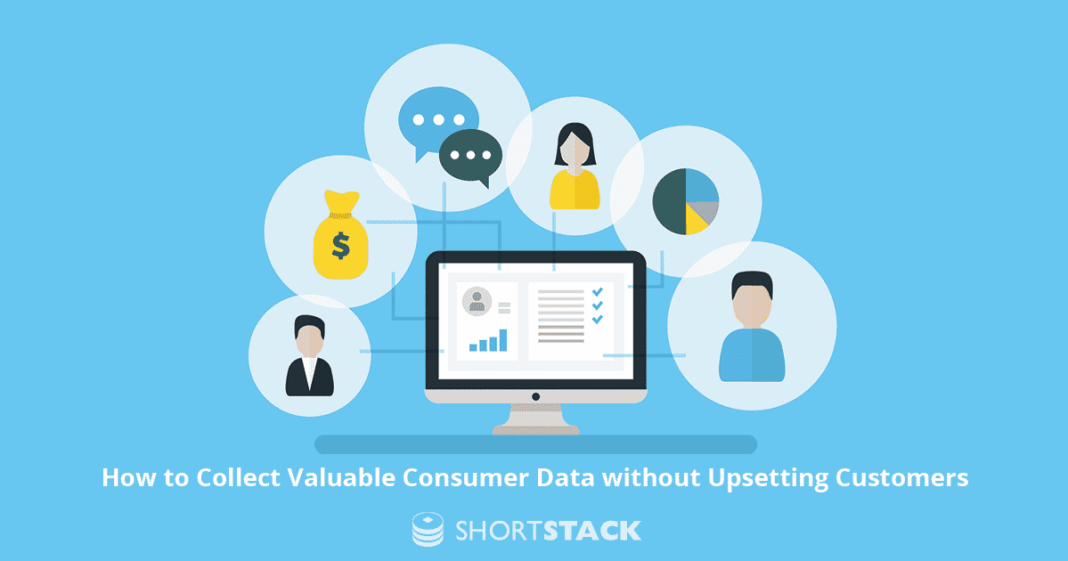
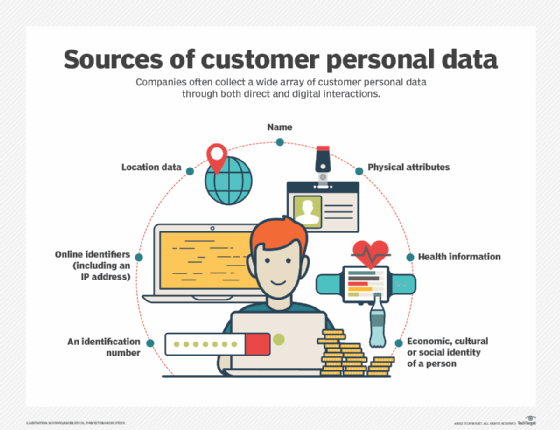
These architectural choices enable the ingestion of diverse consumer data sources—from web analytics and mobile app usage to CRM, point-of-sale (POS) systems, social media interactions, and IoT device data—into a consolidated platform.
Key Components for Insight Generation
Within this architecture, several components are vital for transforming raw consumer data into actionable insights:
- Data Unification and Identity Resolution: This is the core strength of a CDP. It stitches together disparate data points belonging to the same individual across various identifiers (email, device ID, cookie ID) to create a single, persistent customer profile. This unified view is crucial for understanding the complete customer journey.
- Feature Store (Conceptual Adaptation): While often associated with MLOps platforms, the concept of a feature store is highly relevant for consumer data. It involves creating and storing curated, reusable features derived from raw customer data (e.g., “days since last purchase,” “average order value,” “churn probability score”). These features are critical for training and deploying machine learning models that predict customer behavior.
- Data Labeling for AI/ML: For predictive analytics and machine learning applications, specific elements of consumer data may require labeling. For instance, customer feedback might be labeled for sentiment analysis (positive, negative, neutral), or customer segments might be manually labeled for model validation. This process ensures that AI models learn from accurate and relevant historical behaviors to make future predictions.
Challenges and Barriers to Adoption
Despite the immense potential, implementing and maximizing the value of a consumer data platform comes with significant challenges:
- Data Silos and Integration Complexity: Organizations often struggle with integrating data from numerous legacy systems and fragmented sources, leading to incomplete customer profiles and hindering a holistic view of customer behavior.
- Data Quality and Consistency: The adage “garbage in, garbage out” holds true. Inconsistent formats, missing values, duplicates, and inaccurate data severely undermine the reliability of insights and the performance of AI models built upon them.
- Data Privacy and Compliance: Navigating the complex landscape of global data privacy regulations (e.g., GDPR, CCPA, LGPD) is a paramount concern. Features like Consent Management, Data Anonymization, Role-Based Access Control, and Data Retention Policies are not just good practices but legal necessities to ensure ethical handling of sensitive consumer data.
- Data Drift: Consumer behavior patterns are not static. Economic shifts, cultural trends, and new product introductions can cause the underlying data distributions to change over time, leading to performance degradation in predictive models. Continuous monitoring and model retraining are essential.
- MLOps Complexity: For platforms heavily integrating AI/ML, managing the full lifecycle of models built on consumer data—from experimentation and deployment to monitoring, governance, and retraining—introduces significant operational complexity.
Business Value and ROI of Consumer Data Platforms
Overcoming these challenges unlocks substantial business value and a compelling return on investment:
- Faster Model Deployment for Predictive Analytics: By providing clean, unified, and feature-rich consumer data, CDPs significantly accelerate the development and deployment of machine learning models for Predictive Analytics (e.g., churn prediction, Customer Lifetime Value (LTV) forecasting), Customer Segmentation, Recommendation Engines, and Sentiment Analysis.
- Enhanced Data Quality for AI-driven Insights: The rigorous data unification and cleansing processes inherent in CDPs ensure that AI/ML models operate on high-quality data, leading to more accurate predictions and actionable insights.
- Hyper-Personalization and Improved Customer Experience: With a 360-degree view of each customer, businesses can deliver truly personalized experiences across all channels, from website content and product recommendations to email campaigns and customer service interactions.
- Optimized Marketing Campaigns and Resource Allocation: Granular insights into customer behavior enable highly targeted marketing campaigns, reducing wasted ad spend and improving campaign ROI. Resources can be allocated more effectively based on data-driven understanding of customer segments and their preferences.
- Increased Customer Lifetime Value (LTV) and Reduced Churn: By proactively identifying at-risk customers, nurturing loyal ones, and cross-selling/upselling relevant products, businesses can significantly increase LTV and reduce customer attrition.
Comparative Insight: CDP vs. Traditional Data Lake/Data Warehouse
While often coexisting within an enterprise’s data ecosystem, Customer Data Platforms fundamentally differ from traditional data lakes and data warehouses, particularly in their primary objectives and operational paradigms. Understanding these distinctions is crucial for identifying where each technology best serves the need for consumer data insights.
Traditional data warehouses (DWs) are typically optimized for structured data, batch processing, and analytical reporting across large datasets. They excel at providing aggregated business intelligence, such as sales trends, inventory levels, and financial performance. Data lakes, on the other hand, are designed to store vast quantities of raw, unstructured, semi-structured, and structured data from diverse sources, often at a lower cost. They serve as central repositories for all enterprise data, enabling advanced analytics and machine learning applications by data scientists.
However, both traditional DWs and data lakes primarily focus on data storage and historical reporting, often lacking the real-time activation capabilities and individual-level customer understanding that modern marketing and customer experience teams require. Their architecture is typically IT-centric, necessitating significant technical expertise to query and extract specific consumer data insights.
A CDP, by contrast, is purpose-built to create a unified, persistent, and actionable profile of individual customers. Its core function revolves around identity resolution – stitching together fragmented consumer data across every touchpoint to form a single, coherent customer record. This enables real-time segmentation, personalization, and activation directly by business users (e.g., marketers, product managers) without heavy reliance on IT. While a CDP may leverage a data lake or data warehouse as its underlying storage or integration layer (e.g., AWS Lake Formation and Analytics Services), its value proposition lies in its focus on the customer entity and its ability to operationalize consumer data for immediate action.
For example, competitors like Salesforce Marketing Cloud, Adobe Experience Platform, Segment, and Tealium offer robust CDP functionalities that go beyond simple data storage. They provide tools for customer segmentation, journey orchestration, A/B testing, and real-time personalization, all powered by a unified view of customer behavior. Even Google Analytics 360, while primarily an analytics platform, increasingly integrates with other services to provide a more holistic view of customer interactions. In essence, a CDP bridges the gap between raw data storage and actionable customer engagement, empowering businesses to understand and respond to individual customer behavior at scale in real-time, driving hyper-personalization and delivering superior customer experiences.
World2Data Verdict: The Imperative of Intelligent Consumer Data Orchestration
The imperative for businesses today is not merely to collect consumer data, but to intelligently orchestrate it into a cohesive, actionable resource that drives growth and competitive advantage. The future of understanding customer behavior at scale lies squarely with sophisticated Consumer Data Platforms (CDPs) and their seamless integration with advanced analytics and AI/ML capabilities. These platforms, underpinned by real-time processing, cloud-native architectures, and robust data governance, move beyond retrospective reporting to deliver predictive insights and enable proactive customer engagement.
World2Data recommends that enterprises prioritize investment in a comprehensive CDP strategy. This includes not only the technological infrastructure but also the establishment of strong data governance frameworks (Consent Management, Data Anonymization, Role-Based Access Control) to ensure ethical data handling and compliance. Furthermore, organizations must cultivate a culture of data literacy, empowering business users to leverage consumer data insights directly for personalized marketing, optimized product development, and enhanced customer service. The journey towards mastering consumer data is continuous, demanding ongoing adaptation to evolving privacy regulations, technological advancements, and shifting customer expectations.