


Unified Data Platform: Breaking Down Data Silos for Enhanced Intelligence
Platform Category: Unified Data Platform
Core Technology/Architecture: Data Lakehouse, Cloud-native, Microservices
Key Data Governance Feature: Centralized Data Catalog, Role-Based Access Control, Data Lineage
Primary AI/ML Integration: Built-in ML capabilities, Integration with popular ML frameworks and cloud AI services
Main Competitors/Alternatives: Databricks, Snowflake, Google Cloud Dataproc, Microsoft Azure Synapse Analytics, Amazon EMR
In today’s complex business environment, organizations constantly grapple with the challenge of fragmented information. Data often resides in isolated systems, creating what are commonly known as data silos, hindering a holistic view and efficient operations. The advent of a Unified Data Platform offers a robust solution, transforming how enterprises manage and leverage their crucial data assets, paving the way for unprecedented insights and operational excellence.
The prevalence of fragmented data across disparate departmental systems creates significant bottlenecks. This disjointed landscape obstructs comprehensive analysis and prevents a single, coherent understanding of customer behavior, operational performance, or market trends. Businesses often find themselves making critical decisions based on incomplete or outdated information, leading to missed opportunities and inefficiencies that directly impact bottom-line profitability and strategic agility.
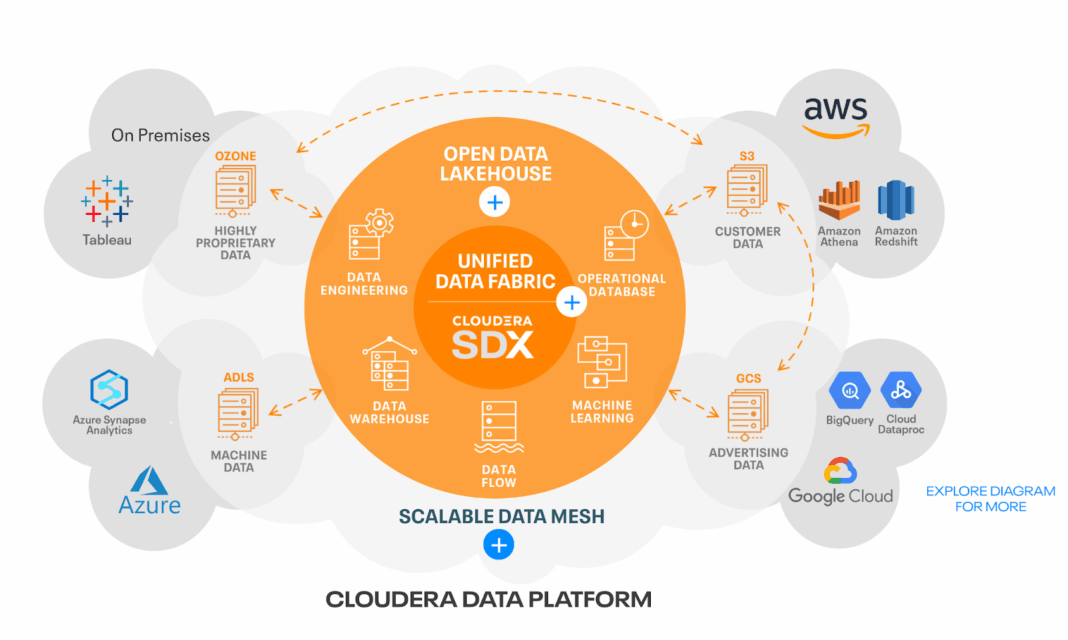
Introducing a robust Unified Data Platform integrates these diverse data sources into one cohesive environment. It provides a centralized repository and a consistent framework for data ingestion, processing, and reliable access. This powerful platform effectively establishes a single source of truth, empowering every department to rely on identical, validated information for all their needs, from operational reporting to advanced predictive modeling.
With all relevant data consolidated through a Unified Data Platform, businesses gain unparalleled insights into their operations. Real-time analytics and advanced reporting capabilities become standard, allowing for faster, more informed decision-making across the board. Predictive models, previously challenging to build due to scattered data, now thrive on a complete data foundation, offering a distinct strategic advantage in a competitive market.
Operational efficiencies dramatically improve as data duplication is minimized and manual data integration tasks are significantly reduced. A Unified Data Platform inherently fosters seamless cross-functional collaboration, as teams share the same foundational data for analysis and planning. This approach also profoundly strengthens data governance and simplifies compliance efforts across the organization, reducing risk and ensuring data integrity.
Investing in a Unified Data Platform inherently prepares an organization for evolving data landscapes and future technological advancements. Its inherent scalability and adaptability ensure that as data volumes grow and new analytical needs emerge, the platform can effortlessly accommodate them, driving continuous innovation across the entire enterprise with confidence.
Introduction: Bridging the Chasm of Disjointed Data with a Unified Data Platform
The digital transformation era has inundated businesses with an unprecedented volume, velocity, and variety of data. While this data holds immense potential, its dispersion across numerous operational systems, applications, and departments creates significant organizational friction. From CRM systems to ERPs, IoT devices to marketing automation tools, each generates valuable information that, when isolated, tells only a partial story. This fragmentation, commonly referred to as data silos, impedes a holistic understanding of business operations, customer journeys, and market dynamics. The objective of this deep dive is to explore how a Unified Data Platform serves as the quintessential solution to this pervasive challenge, offering a consolidated, governed, and high-performance environment for all organizational data assets. We will delve into its architectural tenets, the profound business value it delivers, and how it dramatically reshapes the competitive landscape for data-driven enterprises.
Core Breakdown: Architecting Intelligence with a Unified Data Platform
A Unified Data Platform is more than just a collection of tools; it represents a strategic architectural shift towards a cohesive data ecosystem. At its heart, it aims to converge the capabilities of traditional data warehouses and data lakes, often adopting a “Data Lakehouse” architecture. This hybrid approach allows for the cost-effective storage of vast amounts of raw, unstructured data (like a data lake) while providing the schema, data quality, and performance benefits of a data warehouse for structured and semi-structured data. This convergence is critical for supporting diverse analytical workloads, from descriptive reporting to advanced machine learning.
Key Architectural Components and Capabilities:
- Centralized Ingestion Layer: A robust ingestion pipeline supports real-time streaming (e.g., Apache Kafka, Flink) and batch processing (e.g., Spark, Hadoop) from myriad sources. This ensures all relevant data, regardless of its origin or format, can be efficiently brought into the platform.
- Unified Storage Layer (Data Lakehouse): Leveraging cloud-native object storage (e.g., S3, ADLS, GCS) for scalability and cost-efficiency, combined with open table formats (e.g., Delta Lake, Apache Iceberg, Apache Hudi) to bring transactional capabilities, schema enforcement, and ACID properties to the data lake. This forms the backbone of the platform, enabling direct query access and data versioning.
- Integrated Processing & Transformation Engines: Powerful distributed processing engines like Apache Spark are central to transforming raw data into refined, analytics-ready datasets. This includes capabilities for data cleaning, aggregation, enrichment, and feature engineering. The platform often supports multiple programming interfaces (SQL, Python, Scala, R) to cater to diverse user skill sets.
- Centralized Data Catalog & Metadata Management: A cornerstone of data governance, the data catalog acts as a single source of truth for all data assets. It includes metadata, schema definitions, data lineage, ownership information, and usage statistics. This makes data discoverable, understandable, and trusted across the organization, crucial for ensuring high Data Quality for AI initiatives.
- Advanced Analytics & ML Capabilities: The platform is designed to natively support complex analytical workloads and machine learning. This includes built-in ML capabilities, integration with popular ML frameworks (TensorFlow, PyTorch, Scikit-learn), and seamless connectivity to cloud AI services. It facilitates the entire ML lifecycle, from data preparation and model training to deployment and monitoring, often supporting MLOps practices.
- Robust Data Governance & Security: Critical features include Role-Based Access Control (RBAC), data masking, encryption at rest and in transit, and comprehensive auditing. Data Lineage tracking ensures transparency about data origins and transformations, vital for compliance and debugging. This centralized control ensures data security and adherence to regulatory requirements like GDPR, CCPA, and HIPAA.
- API-First Approach: Microservices architecture principles ensure that all functionalities are exposed via well-defined APIs, promoting extensibility, interoperability, and integration with existing enterprise systems and external applications.
Challenges/Barriers to Adoption: Navigating the Complexities
Despite the undeniable benefits, implementing a Unified Data Platform is not without its hurdles. One significant challenge is managing Data Drift, where the statistical properties of the target variable, or the relationship between input features and target variable, change over time. In a dynamic data environment, this can silently degrade the performance of AI/ML models built on the platform. Proactive monitoring and adaptive model retraining strategies are essential to combat this.
Another barrier lies in the inherent complexity of MLOps (Machine Learning Operations). While a UDF provides the foundational data, operationalizing ML models – automating their deployment, monitoring their performance, and managing their lifecycle – requires specialized tools and expertise. Integrating MLOps workflows seamlessly into the UDF environment demands careful planning and robust engineering practices.
Organizational resistance and cultural shifts also pose significant challenges. Breaking down departmental data silos often means overcoming entrenched practices and fostering a culture of data sharing and collaboration. The upfront investment in technology, skilled personnel, and change management can be substantial, requiring clear communication of the long-term ROI to gain stakeholder buy-in. Furthermore, ensuring consistent data quality across vastly different source systems during initial integration is a monumental task.

Business Value and ROI: Unleashing Enterprise Potential
The strategic value of a Unified Data Platform translates into tangible business benefits and a strong return on investment:
- Faster Model Deployment: By providing clean, integrated, and governed data, the platform drastically reduces the time and effort required for data scientists to prepare data for model training. This accelerates the entire ML lifecycle, leading to quicker insights and faster deployment of AI-powered applications.
- Enhanced Data Quality for AI: Centralized governance, data lineage, and automated quality checks ensure that data consumed by AI and ML models is reliable and accurate. High-quality data is paramount for building performant and unbiased models, minimizing the risk of “garbage in, garbage out” scenarios.
- Improved Decision-Making: With a single source of truth and real-time analytics capabilities, business leaders can make more informed, data-driven decisions across all functions, from strategic planning to operational adjustments.
- Operational Efficiency: Eliminating data duplication, manual integration efforts, and fragmented reporting significantly streamlines operations. This frees up IT and data teams from maintenance tasks to focus on innovation.
- Cost Reduction: Consolidating data infrastructure often leads to lower operational costs through optimized resource utilization, reduced licensing fees for disparate systems, and improved efficiency of data teams.
- Accelerated Innovation: A readily accessible and well-governed data foundation empowers teams to explore new data combinations, experiment with advanced analytics techniques, and develop innovative products and services at a faster pace. This agility is a key differentiator in today’s market.
- Strengthened Compliance and Risk Management: Centralized data governance features like Role-Based Access Control and comprehensive audit trails simplify compliance with industry regulations and internal policies, reducing legal and reputational risks.
Comparative Insight: Unified Data Platform vs. Traditional Data Architectures
To truly appreciate the power of a Unified Data Platform, it’s essential to compare it with the traditional data architectures it seeks to supersede: the Data Warehouse and the Data Lake.
Traditional Data Warehouse:
Strengths: Optimized for structured, historical data. Provides strong ACID compliance, robust querying capabilities (SQL), and excellent performance for BI and reporting. Data is typically pre-processed, cleaned, and conforms to a strict schema.
Weaknesses: High cost for large volumes, rigid schema makes it inflexible for new data sources or formats. Poor suitability for unstructured data, real-time analytics, and machine learning workloads that require raw, diverse data. Scalability can be challenging.
Traditional Data Lake:
Strengths: Stores vast amounts of raw, structured, semi-structured, and unstructured data at low cost. Highly flexible, “schema-on-read” approach, ideal for exploratory analytics and machine learning where data scientists need access to raw data. High scalability.
Weaknesses: Can become a “data swamp” without proper governance, metadata, and quality controls. Lack of ACID properties and schema enforcement can lead to data integrity issues. Performance for complex SQL queries on raw data can be poor. Data quality is often inconsistent.
Unified Data Platform (often Data Lakehouse):
Key Differentiators: A Unified Data Platform, particularly one built on a Data Lakehouse architecture, bridges the gap by offering the best of both worlds. It combines the low-cost, scalable storage and flexibility of a data lake with the data management, governance, and performance capabilities of a data warehouse. This means:
- Schema Flexibility & Enforcement: Supports both schema-on-read for raw ingestion and schema-on-write for curated datasets, allowing for flexibility during exploration and reliability for production analytics.
- ACID Transactions & Data Reliability: Open table formats bring transactional capabilities to the data lake, ensuring data consistency and reliability for critical workloads.
- Unified Data Access: All data, regardless of structure, is accessible from a single platform using common tools (e.g., SQL, Python), eliminating the need to move data between disparate systems for different analytical purposes.
- Enhanced Performance: Query engines are optimized to run directly on the data lake storage, often leveraging techniques like caching, indexing, and columnar formats to deliver warehouse-like performance.
- Integrated ML/AI: Designed from the ground up to support the full ML lifecycle, providing a robust foundation for building, training, and deploying models directly on the platform.
- Comprehensive Governance: Centralized Data Catalog, data lineage, and RBAC apply uniformly across all data types and workloads, addressing the “data swamp” problem of traditional data lakes.
In essence, while traditional architectures often force a choice between flexibility and governance, or between raw data and curated data, a Unified Data Platform offers a truly integrated environment. It supports the entire data lifecycle from raw ingestion to highly refined analytics and AI applications, making it far superior for modern, data-intensive organizations.
World2Data Verdict: The Imperative for a Unified Data Platform
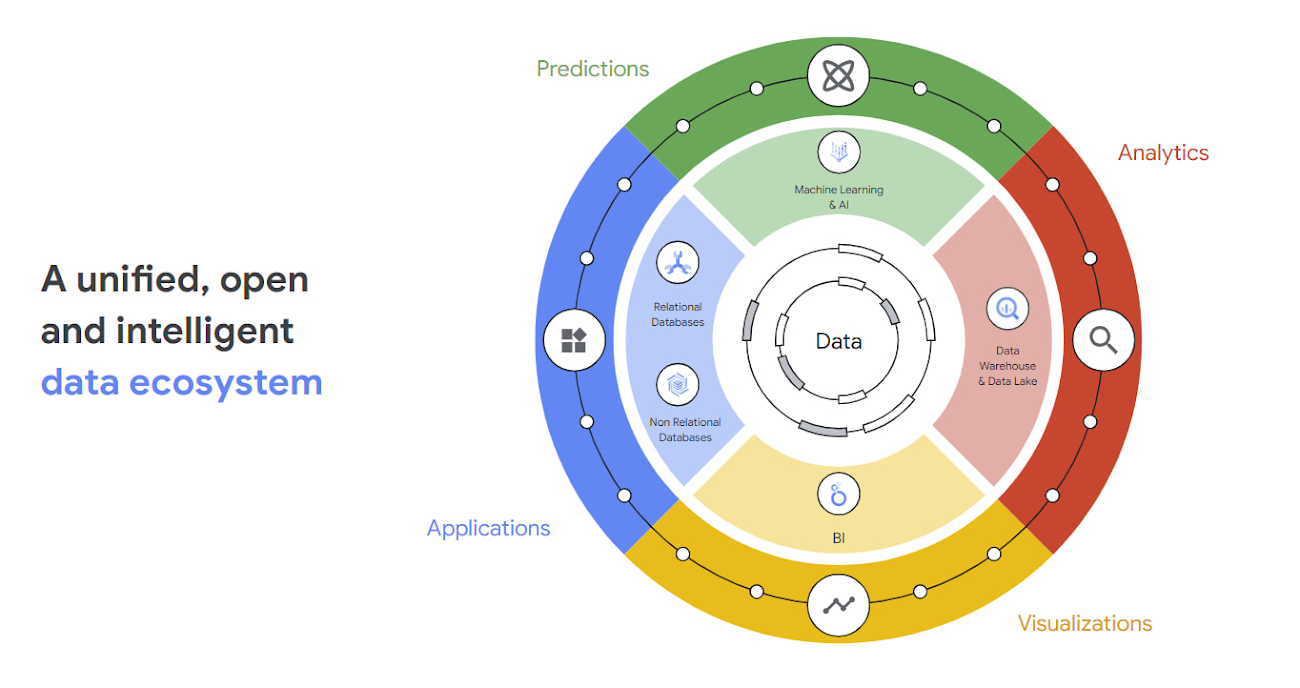
The journey towards true data-driven intelligence is intrinsically linked to overcoming data fragmentation. World2Data’s analysis unequivocally concludes that adopting a Unified Data Platform is no longer merely an option but a strategic imperative for any organization aiming for sustained competitive advantage. Its ability to centralize, govern, and make accessible all forms of data transforms raw information into actionable insights at an unprecedented pace. Organizations that embrace this architecture will not only break down existing data silos but also establish a resilient, scalable foundation for future innovation in AI, machine learning, and advanced analytics. We strongly recommend that businesses prioritize investments in cloud-native, Data Lakehouse-centric Unified Data Platforms, coupled with robust data governance frameworks and MLOps practices, to unlock their full data potential and achieve truly transformative business outcomes. The future of enterprise intelligence is unified.