


Unlocking Sales Potential: Advanced Lead Scoring Models for Superior Efficiency
In today’s competitive business landscape, optimizing sales efficiency is paramount for sustainable growth. Advanced Lead Scoring models stand out as a critical innovation, transforming how businesses identify, qualify, and prioritize prospective customers. By leveraging sophisticated data analytics and machine learning, these models empower sales teams to focus their efforts on the highest-potential leads, significantly reducing wasted resources and accelerating the sales cycle from initial contact to conversion. This deep dive explores the architecture, benefits, and strategic implementation of modern Lead Scoring platforms, revealing how they become indispensable tools for enhancing revenue generation.
Introduction: Revolutionizing Sales Strategy with Intelligent Lead Scoring
The traditional approach to lead qualification often relies on intuition or rudimentary rule-sets, leading to inefficiencies and missed opportunities. However, the advent of intelligent Lead Scoring has fundamentally shifted this paradigm. At its core, Lead Scoring is a systematic methodology for ranking potential customers based on their perceived value and likelihood to convert into paying customers. This ranking is derived from a meticulous analysis of various data points, including demographic information, behavioral patterns, engagement history, and firmographic data. For World2Data.com, understanding and implementing effective Lead Scoring models is not just about adopting a new tool; it’s about embedding data-driven intelligence into the very fabric of sales and marketing operations. This article will dissect the intricate mechanisms of these models, highlight their profound impact on sales efficiency, and provide a comparative perspective against older methodologies.
Core Breakdown: Dissecting the Architecture of Advanced Lead Scoring Platforms
Modern Lead Scoring platforms are sophisticated ecosystems designed to process vast amounts of data and derive actionable insights. They are far more than simple calculators; they represent a convergence of various advanced technologies.
Platform Category: A Unified Ecosystem
These platforms typically reside at the intersection of several critical business intelligence categories:
- CRM Platforms: Often integrated directly or built as extensions, enabling seamless data flow between lead scores and customer relationship management activities.
- Marketing Automation Platforms: Essential for tracking lead behavior (email opens, website visits, content downloads) and nurturing leads based on their scores.
- Sales Intelligence Platforms: Enriching lead profiles with external data points like company size, industry, technology stack, and news mentions to provide a holistic view.
- Data Analytics Platforms: The foundational layer that aggregates, processes, and analyzes diverse data sources to feed the scoring algorithms.
Core Technology and Architecture: The Engine of Intelligence
The technical backbone of effective Lead Scoring models is robust and multifaceted:
- Predictive analytics engines: These are the brains, sifting through historical data to identify trends and predict future lead behavior.
- Machine learning algorithms: At the heart of predictive models, these algorithms (e.g., logistic regression, decision trees, neural networks) learn from past conversions and losses to assign accurate scores. They continuously adapt and improve as more data becomes available.
- Scalable cloud infrastructure: To handle the immense volume and velocity of lead data, platforms rely on cloud-native architectures that can scale dynamically, ensuring real-time processing and responsiveness.
- Real-time data integration capabilities: Seamless integration with various data sources—CRMs, websites, social media, marketing campaigns, third-party data providers—is crucial for a comprehensive and up-to-date view of each lead.
- Rules-based processing: While ML models are powerful, many platforms still incorporate configurable rule-based systems to capture specific business logic or compliance requirements that ML might not intuitively grasp.
Key Data Governance Features: Ensuring Trust and Compliance
For Lead Scoring to be reliable and ethical, strong data governance is indispensable:
- Data quality management for lead data: Tools and processes to ensure the accuracy, completeness, and consistency of lead information, preventing “garbage in, garbage out” scenarios.
- Role-based access control: Limiting who can view, modify, or analyze lead scores and associated data, maintaining confidentiality and preventing unauthorized access.
- Data privacy compliance features (e.g., for PII): Adherence to regulations like GDPR, CCPA, and others, ensuring personally identifiable information (PII) is handled securely and transparently.
- Audit trails for score changes and model updates: Providing a clear history of how scores were calculated, why they changed, and when models were updated, fostering transparency and accountability.
- Data lineage tracking: Understanding the origin and transformation of data points used in scoring, which is vital for debugging, compliance, and building trust in the model’s outputs.
Primary AI/ML Integration: The Intelligence Multiplier
AI and Machine Learning are not just features; they are foundational to modern Lead Scoring:
- Built-in supervised and unsupervised machine learning models: Supervised models learn from labeled data (e.g., historical converted vs. unconverted leads) to predict conversion likelihood. Unsupervised models can identify clusters of similar leads or anomalies without prior labeling.
- Automated identification of high-potential leads: Beyond just scoring, AI can flag leads that exhibit specific high-value characteristics or behaviors in real-time.
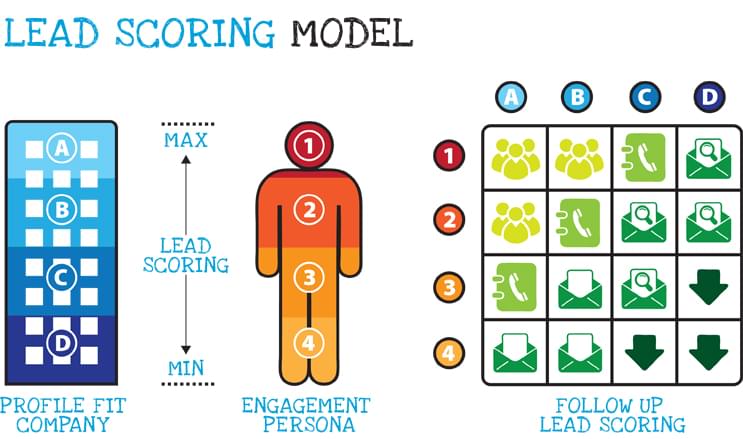
- Dynamic scoring based on behavioral and demographic data: Scores are not static; they evolve as leads interact with marketing content, visit specific web pages, or their demographic/firmographic profiles change.
- Integration with external AI/ML services for custom model deployment: Businesses with unique needs can integrate their own bespoke ML models, allowing for greater customization and competitive advantage.
- Natural language processing for unstructured data analysis: Analyzing text from emails, chat logs, social media interactions, or customer service notes to extract sentiment, intent, and other qualitative data that can influence lead scores.
Challenges/Barriers to Adoption: Navigating the Complexities
While the benefits are clear, implementing sophisticated Lead Scoring models is not without its hurdles:
- Data Silos and Integration Complexity: Often, valuable lead data is scattered across multiple systems (CRM, marketing automation, website analytics, ERP). Integrating these disparate sources into a unified view requires significant effort, technical expertise, and robust APIs.
- Data Quality and Completeness: The effectiveness of any ML model is heavily dependent on the quality of its input data. Inconsistent, incomplete, or inaccurate lead data can lead to skewed scores and misprioritized efforts, eroding trust in the system.
- Model Drift and Maintenance: Business environments, customer behaviors, and market conditions are dynamic. A Lead Scoring model that performs well today might become less accurate tomorrow (model drift). Continuous monitoring, retraining, and updating of models are essential but resource-intensive.
- Skill Gap and Talent Shortage: Designing, implementing, and maintaining advanced ML-driven Lead Scoring platforms requires data scientists, machine learning engineers, and data analysts—roles that are often in high demand and short supply.
- Resistance to Change and User Adoption: Sales and marketing teams accustomed to traditional methods might be resistant to adopting new, data-driven approaches. Proper training, clear communication of benefits, and demonstrating early wins are crucial for successful adoption.
- Cost of Implementation and Ownership: Investing in advanced platforms, integrating them, and potentially hiring specialized talent represents a significant financial commitment, especially for smaller organizations.
Business Value and ROI: Tangible Returns
The investment in advanced Lead Scoring models yields substantial returns across various business functions:
- Faster Model Deployment: By automating the lead qualification process, businesses can deploy new campaigns or adjust strategies more rapidly, responding to market changes with agility.
- Improved Sales Productivity: Sales reps spend less time on unqualified leads, allowing them to focus their energy on prospects who are genuinely interested and ready to buy. This directly translates to more meaningful conversations and higher close rates.
- Higher Conversion Rates: By prioritizing leads with the highest scores, conversion rates improve significantly as sales efforts are directed towards the most promising opportunities.
- Enhanced Data Quality for AI: The continuous feedback loop from sales outcomes helps refine the Lead Scoring models, ensuring that the data used for AI predictions becomes increasingly accurate and valuable over time.
- Optimized Marketing Spend: Marketing teams gain clearer insights into which campaigns generate the highest-quality leads, enabling them to optimize budgets and focus on channels and content that deliver the best ROI.
- Better Sales and Marketing Alignment: A standardized scoring system provides a common language and objective criteria for handing off leads, fostering greater collaboration and accountability between sales and marketing departments.
- Predictable Revenue Growth: With more efficient sales processes and improved conversion rates, businesses can achieve more predictable and sustainable revenue growth.
Comparative Insight: Modern Platforms vs. Traditional Approaches
To truly appreciate the power of advanced Lead Scoring models, it’s essential to compare them with their predecessors or less sophisticated alternatives.
Traditional Rule-Based Scoring
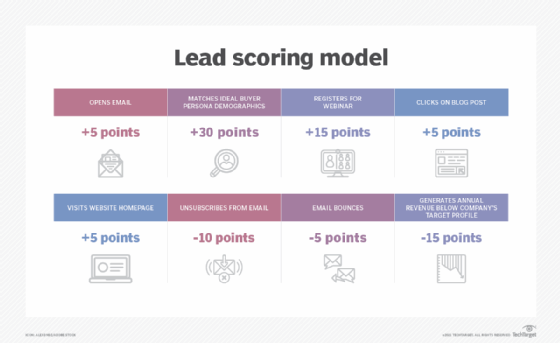
Historically, Lead Scoring relied heavily on manually defined rules. A marketing team might assign points for specific actions (e.g., +10 for downloading an ebook, +20 for attending a webinar) and demographic fit (e.g., +50 for being a C-level executive, -10 for being a student). While simple to understand and implement initially, these models suffer from several limitations:
- Static and Inflexible: Rules are rigid and do not adapt to changing market conditions or evolving customer behavior unless manually updated, which is time-consuming.
- Subjectivity: Defining rules and assigning weights can be subjective and prone to human bias, leading to suboptimal scoring.
- Lack of Predictive Power: They are descriptive rather than predictive. They tell you what a “good” lead looks like based on predefined criteria, but struggle to predict which unknown leads are likely to convert.
- Scalability Issues: Managing a complex web of rules for a large number of lead attributes becomes unwieldy and difficult to maintain.
Manual Lead Qualification
Before any form of automated scoring, sales teams often manually qualified leads based on direct interactions, cold calls, or basic database queries. This method is:
- Resource-Intensive: Requires significant human effort, making it impractical for large volumes of leads.
- Inconsistent: Qualification criteria can vary from one sales representative to another, leading to inconsistent lead quality entering the pipeline.
- Slow: Delays in qualification mean slower response times and potentially missed opportunities.
The Modern AI-Driven Lead Scoring Platform
In stark contrast, today’s AI-driven Lead Scoring platforms offer a quantum leap in capability:
- Dynamic and Adaptive: ML models continuously learn from new data, automatically adjusting scores and criteria as customer behaviors, market trends, or product offerings change.
- Objective and Data-Driven: Algorithms identify patterns and correlations that human analysts might miss, removing subjectivity and bias from the scoring process.
- Strong Predictive Power: They can accurately forecast conversion likelihood by analyzing hundreds or thousands of data points, identifying subtle signals of intent.
- Scalable and Automated: Capable of scoring millions of leads in real-time with minimal human intervention, ensuring consistent and efficient qualification at scale.
- Comprehensive Data Integration: Seamlessly pulls data from across the entire customer journey, providing a truly holistic view that manual or simple rule-based systems cannot match.
Ultimately, while traditional methods served their purpose, they cannot compete with the precision, adaptability, and efficiency offered by AI-powered Lead Scoring platforms. These modern solutions move businesses from reactive guesswork to proactive, data-informed sales strategies.

World2Data Verdict: The Imperative of Intelligent Lead Scoring
For organizations striving for sales excellence and market leadership, the adoption of advanced Lead Scoring models is no longer optional—it’s an imperative. World2Data.com unequivocally recommends that businesses invest in sophisticated Lead Scoring platforms that leverage machine learning and robust data governance. The future of sales efficiency lies in the intelligent prioritization of prospects, driven by dynamic, data-driven insights rather than static rules or gut feelings. Companies that embrace these technologies will not only witness significant improvements in sales productivity, conversion rates, and ROI but will also foster stronger alignment between marketing and sales, creating a cohesive revenue engine. The competitive edge will belong to those who can most effectively translate raw data into actionable intelligence, ensuring every sales interaction is focused on the highest-potential opportunity. Proactive engagement with these advanced solutions will solidify a pathway to sustained growth and market dominance in an increasingly data-centric world.