


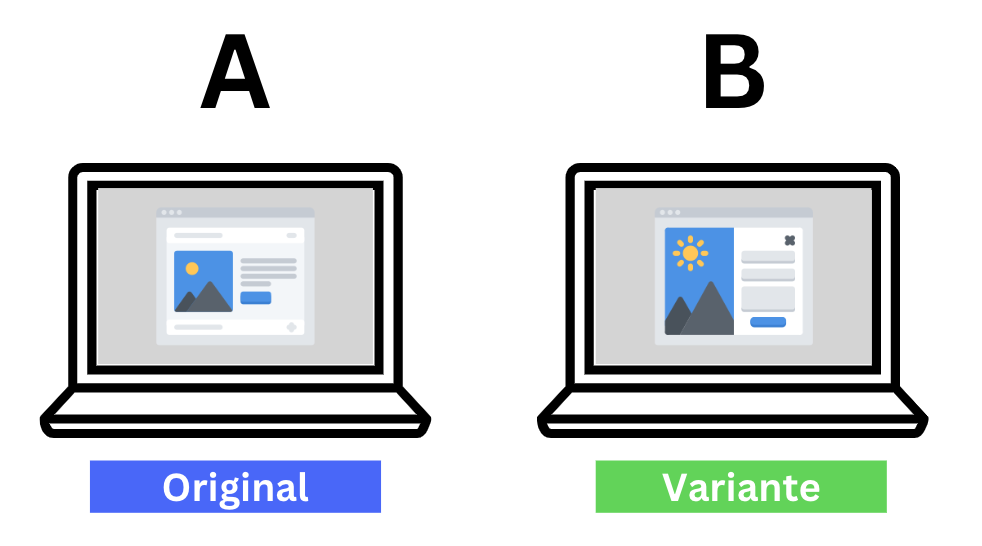
A/B Testing: Running Experiments That Actually Improve Results
At World2Data.com, we understand the critical role of data in driving business success. Today, we delve into the power of A/B testing – a fundamental methodology underpinned by robust experimentation platforms. These platforms leverage core technologies such as Statistical Hypothesis Testing, Feature Flagging, and Event-Driven Data Collection to ensure rigorous experimentation. Key data governance features like Data Quality Assurance for Experiment Metrics, Role-Based Access Control for Experiment Settings, and Compliance with Data Privacy Regulations are paramount. Furthermore, modern A/B testing solutions often integrate Multi-armed Bandit Optimization, Automated Anomaly Detection in Experiment Results, and even AI-driven Personalization to maximize impact. Leading competitors in this space include Optimizely, VWO, Adobe Target, Amplitude Experiment, and Split.io, all striving to deliver superior tools for data-driven optimization.
In the dynamic landscape of digital experiences, relying on intuition alone is a gamble. A/B testing provides a scientific backbone for decision-making, allowing businesses to compare two or more variations of a web page, application feature, or marketing campaign to determine which performs better against a defined goal. This rigorous approach minimizes risk, optimizes user journeys, and ultimately drives measurable improvements in conversion rates, engagement, and revenue. By embracing a culture of continuous experimentation, organizations can unlock significant growth potential.
Introduction to Scientific Experimentation: The Power of A/B Testing
The core objective of any digital strategy is to create experiences that resonate with users and drive desired outcomes. However, identifying what truly works amidst countless variables can be challenging. This is where A/B testing emerges as an indispensable tool. Far more than just guessing, A/B testing is a structured approach to comparing different versions of a product, marketing asset, or user flow to isolate the impact of specific changes. By dividing an audience into segments and presenting each segment with a different variant, businesses gain empirical evidence to validate hypotheses and make informed decisions.
The true power of A/B testing lies in its ability to quantify the impact of changes, moving beyond subjective opinions to objective data. Whether it’s optimizing a call-to-action button, refining a landing page layout, or personalizing email subject lines, a well-executed A/B test provides clear insights into user behavior and preferences. This deep dive will explore the architectural underpinnings of sophisticated experimentation platforms, dissect the critical components that make robust A/B testing possible, and highlight its transformative business value in today’s data-centric world.
Core Breakdown: Architecture and Components of an Experimentation Platform
A robust experimentation platform, designed for effective A/B testing, is a complex ecosystem of integrated technologies. It goes beyond simple variant serving, encompassing sophisticated data collection, statistical analysis, and decision-making capabilities.
Understanding the Core Technologies
- Statistical Hypothesis Testing: At the heart of A/B testing is the principle of statistical hypothesis testing. This involves formulating a null hypothesis (e.g., there is no difference between Variant A and Variant B) and an alternative hypothesis (e.g., Variant B performs better than Variant A). Data collected from the experiment is then analyzed to determine the probability of observing such results if the null hypothesis were true. Key statistical concepts like p-values, confidence intervals, and statistical power are crucial for interpreting results accurately and avoiding false positives (Type I errors) or false negatives (Type II errors).
- Feature Flagging: Also known as feature toggles, feature flagging is a powerful DevOps technique that allows developers to turn specific features on or off for different user segments without deploying new code. In the context of A/B testing, feature flags are fundamental for serving different variants to distinct user groups. This capability enables seamless experimentation, quick rollbacks, and progressive feature rollouts, significantly reducing the risk associated with new deployments. It’s the technical backbone that allows for precise control over who sees which version of an experience.
- Event-Driven Data Collection: Effective A/B testing relies heavily on real-time or near real-time collection of user interaction data. Experimentation platforms utilize event-driven architectures to capture every relevant user action – clicks, scrolls, form submissions, purchases, page views – as distinct events. These events are then streamed, processed, and stored, forming the raw data upon which experiment metrics are calculated. The accuracy and completeness of this data are paramount for drawing valid conclusions from tests.
Key Data Governance Features for Experiments
Ensuring the integrity and legality of your experimentation process is as vital as the tests themselves:
- Data Quality Assurance for Experiment Metrics: High-quality data is the bedrock of reliable A/B testing. Platforms must incorporate robust mechanisms for validating incoming data, detecting anomalies, handling missing values, and ensuring that metrics are calculated consistently across all variants. Inaccurate data can lead to flawed conclusions, misinformed decisions, and ultimately, wasted resources.
- Role-Based Access Control (RBAC) for Experiment Settings: To prevent unauthorized changes and maintain the integrity of experiments, RBAC is essential. This feature ensures that only authorized personnel can create, modify, launch, or stop tests, define target audiences, or access sensitive results. It’s crucial for maintaining operational security and compliance.
- Compliance with Data Privacy Regulations: With regulations like GDPR, CCPA, and others, platforms must be built with privacy by design. This includes anonymization of data, consent management features, secure data handling, and transparent reporting on data usage. Experiments must be conducted in a manner that respects user privacy and adheres to legal frameworks.
Primary AI/ML Integration in Modern A/B Testing
The evolution of experimentation platforms now heavily involves AI and Machine Learning to supercharge traditional A/B testing:
- Multi-armed Bandit Optimization: Moving beyond traditional A/B testing’s fixed allocation, multi-armed bandits dynamically allocate traffic to variants that are performing better. This means that as an experiment progresses, more users are exposed to the “winning” variant, minimizing opportunity cost and accelerating the path to optimal results.
- Automated Anomaly Detection in Experiment Results: ML algorithms can continuously monitor experiment data for unusual patterns or unexpected deviations in metrics that might indicate a problem with the test setup, data collection, or even a systemic issue within the product itself. This allows teams to quickly identify and address issues, preventing invalid test results.
- AI-driven Personalization: The ultimate goal of many experiments is to deliver personalized experiences. AI/ML models can leverage experiment data to understand user segments better and dynamically serve the most relevant content or features to individual users, moving beyond static A/B tests to continuous optimization and tailored user journeys.
Challenges and Barriers to A/B Testing Adoption
While the benefits are clear, organizations often face hurdles in implementing effective A/B testing programs:
- Statistical Validity and Misinterpretation: A common pitfall is misinterpreting statistical significance, leading to false positives or prematurely ending tests. Factors like low traffic, novelty effects, or external influences (seasonality, marketing campaigns) can skew results if not properly accounted for. Proper statistical literacy and robust platform tooling are essential.
- Resource Constraints and Technical Debt: Running numerous tests requires significant developer and design resources. Managing a multitude of feature flags across different parts of a product can lead to “flag sprawl” and technical debt, making the system harder to maintain and understand.
- Defining Clear Hypotheses and Metrics: Without clear, measurable hypotheses linked to business objectives, tests can lack direction and yield inconclusive results. Choosing the wrong metrics or not having reliable data pipelines for those metrics can render an experiment useless.
- Organizational Silos and Cultural Resistance: A/B testing thrives in a data-driven culture. Resistance from teams accustomed to intuition-based decision-making or a lack of cross-functional collaboration can hinder the adoption and scaling of experimentation efforts.
- Experiment Duration and Sample Size: Determining the right duration and required sample size for a test is crucial. Too short or too small, and results may not be statistically significant. Too long, and opportunities for improvement are lost. This requires careful planning and power analysis.
Business Value and ROI of Effective A/B Testing
The investment in an experimentation platform and a dedicated A/B testing strategy yields significant returns:
- Improved Conversion Rates and Revenue: This is often the most direct and measurable benefit. Small, incremental improvements across various touchpoints can lead to substantial gains in conversions, sign-ups, and ultimately, revenue.
- Enhanced User Experience (UX): By testing different UI elements, navigation flows, and content, businesses can identify what truly resonates with their audience, leading to more intuitive, satisfying, and effective user experiences.
- Data-Driven Decision Making: A/B testing shifts decision-making from subjective opinions to objective data, fostering a culture of evidence-based product development and marketing. This reduces risk and increases confidence in strategic choices.
- Faster Iteration and Innovation: Experimentation platforms accelerate the pace of learning. Teams can quickly test new ideas, validate hypotheses, and iterate on product features or marketing campaigns, leading to faster innovation cycles.
- Optimized Resource Allocation: By identifying which changes truly move the needle, organizations can prioritize development efforts and marketing spend on strategies that are proven to deliver results, avoiding investments in ineffective solutions.
- Reduced Risk of Negative Impact: Launching new features or designs without testing carries inherent risks. A/B testing allows for controlled rollouts, ensuring that changes are validated on a small segment of users before broader deployment, thus mitigating potential negative impacts on key metrics.

Comparative Insight: A/B Testing Platforms vs. Traditional Data Infrastructure
While traditional data infrastructure like Data Lakes and Data Warehouses are foundational for storing and processing vast amounts of raw and structured data, they differ significantly from specialized Experimentation Platforms designed for A/B testing. Understanding this distinction is crucial for effective data-driven optimization.
Traditional Data Lakes and Data Warehouses
- Purpose: Data Lakes are designed for storing raw, diverse, and large volumes of data from various sources without a predefined schema. Data Warehouses, on the other hand, focus on structured, clean data optimized for reporting and business intelligence (BI) queries.
- Capabilities for Experimentation: While you can technically store experiment data in a data lake or warehouse, these platforms lack the built-in functionalities critical for running robust experiments. They provide storage and query capabilities, but not the mechanisms for traffic allocation, variant serving, statistical analysis, or real-time metric calculation that A/B testing demands.
- Complexity: Manually setting up and managing an A/B test using only a data lake or warehouse requires significant custom development for every experiment. This includes building custom logic for user segmentation, variant assignment, data tracking, and post-experiment statistical analysis, which is prone to errors and resource-intensive.
Dedicated Experimentation Platforms (A/B Testing Platforms)
Platforms like Optimizely, VWO, Adobe Target, Amplitude Experiment, and Split.io are built from the ground up to facilitate and streamline the entire experimentation lifecycle:
- Integrated Experiment Management: These platforms provide intuitive user interfaces for setting up tests, defining goals, creating variants, and managing user segments. They abstract away much of the underlying complexity.
- Built-in Statistical Engines: A core differentiator is their embedded statistical analysis capabilities, which handle the intricacies of hypothesis testing, power calculations, and significance analysis, presenting results in an understandable format. This ensures statistical rigor without requiring every user to be a statistician.
- Traffic Allocation and Variant Serving: They offer sophisticated mechanisms for randomly assigning users to different variants, ensuring unbiased experiment groups. This often involves client-side JavaScript, server-side SDKs, or edge-based solutions coupled with Feature Flagging.
- Real-time Metric Tracking: Experimentation platforms are optimized for collecting and processing Event-Driven Data Collection, immediately tying user interactions back to specific experiment variants and calculating key performance indicators (KPIs) in real-time or near real-time.
- Advanced Features: Many offer advanced capabilities like Multi-armed Bandit Optimization, automated personalization, and integration with other marketing and analytics tools.
- Governance and Collaboration: They typically include robust features for Role-Based Access Control, auditing, and collaboration tools, making it easier for cross-functional teams to manage and learn from experiments collectively.
In essence, while data lakes and warehouses are excellent for centralizing and processing data, they are general-purpose tools. Dedicated A/B testing platforms provide the specialized tooling, statistical rigor, and workflow automation necessary to run effective, scalable, and reliable experiments that actually improve results, translating raw data into actionable insights for continuous optimization.

World2Data Verdict: The Imperative for Integrated Experimentation
The future of digital product development and marketing is unequivocally rooted in continuous experimentation. World2Data.com’s analysis shows that isolated A/B testing efforts, while valuable, represent only a fraction of their potential. The true differentiator for leading organizations will be their ability to integrate A/B testing seamlessly into their broader data strategy and product lifecycle.
We recommend that businesses not only invest in robust Experimentation Platforms but also foster a culture where experimentation is a core competency, not an afterthought. This means breaking down silos between product, engineering, marketing, and data teams, ensuring that insights from A/B tests directly inform product roadmaps and marketing campaigns. The ongoing evolution of AI and ML integrations, from automated anomaly detection to multi-armed bandit optimization and advanced personalization, will further elevate the sophistication and impact of these platforms. Organizations that embrace a fully integrated, data-governed, and AI-augmented A/B testing strategy will be the ones best positioned to understand their users deeply, adapt rapidly to market changes, and consistently deliver superior digital experiences that drive significant and sustainable growth.