


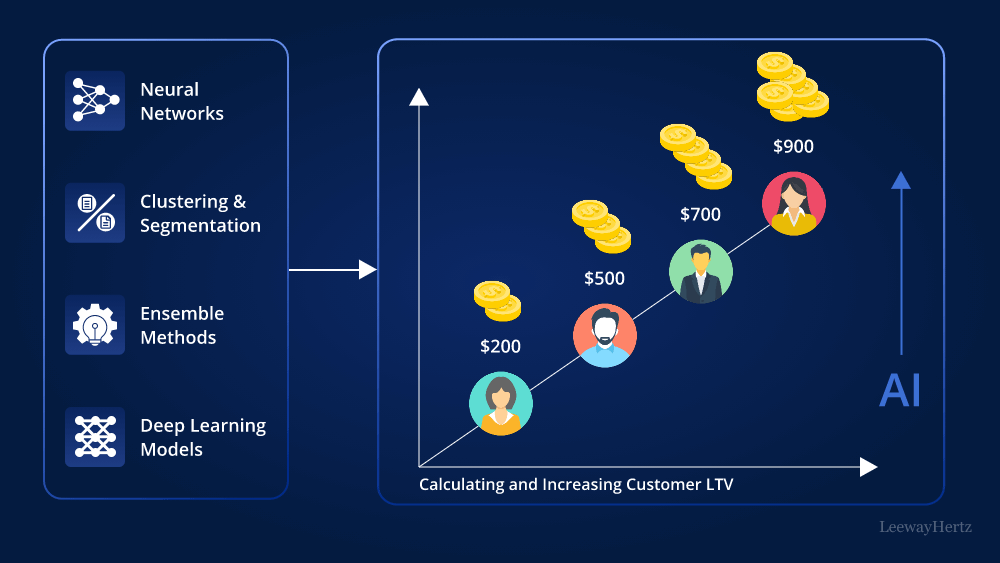
AI Support for Building Customer Prediction Models
1. Platform Category: Machine Learning / AutoML Platform
2. Core Technology/Architecture: Cloud-based AutoML, Feature Stores
3. Key Data Governance Feature: Model Registry and Lineage Tracking
4. Primary AI/ML Integration: Supervised Learning for Predictive Analytics (Churn, LTV)
5. Main Competitors/Alternatives: Google Vertex AI, Amazon SageMaker, DataRobot, Salesforce Einstein
The landscape of modern business intelligence is being fundamentally reshaped by artificial intelligence, particularly through its powerful application in customer prediction. AI Support for Building Customer Prediction Models is transforming how businesses understand and engage with their clientele, moving beyond reactive strategies to proactive, data-driven foresight. Leveraging sophisticated algorithms, AI Customer Prediction Models offer unparalleled insights into future customer actions, making strategic planning more precise, personalized, and ultimately, more profitable for enterprises of all sizes.
Unlocking Future Insights: The Power of AI Customer Prediction Models
In today’s hyper-competitive market, understanding and anticipating customer behavior is no longer a luxury but a necessity for survival and growth. Traditional analytics often provide a rearview mirror perspective, telling us what happened. However, the true competitive edge lies in foresight. This is where AI Customer Prediction Models come into play, serving as an indispensable tool for businesses striving to forecast future customer actions, from purchase likelihood and product adoption to churn risk and lifetime value (LTV). By harnessing the power of artificial intelligence, organizations can move from reactive decision-making to a proactive stance, personalizing experiences, optimizing resource allocation, and ultimately driving sustainable growth. This article will delve into the technical underpinnings, strategic advantages, the inherent challenges, and the transformative impact of leveraging AI to construct robust customer prediction models within a modern data platform environment.
Core Breakdown: Architecture and Components of Advanced AI Customer Prediction Platforms
Building effective AI Customer Prediction Models requires a sophisticated data and machine learning infrastructure. At its heart, an AI data platform for customer predictions is a complex ecosystem designed to ingest, process, store, and analyze vast quantities of diverse customer data, ultimately enabling the training, deployment, and continuous improvement of predictive models. The architecture goes beyond mere data storage, incorporating specialized components that automate and optimize the entire machine learning lifecycle.
The Foundation of Predictive Analytics: Data Understanding and Preparation
The journey to accurate customer prediction begins and ends with data. High-quality, comprehensive data forms the bedrock for any effective prediction model. This involves not just transactional data but also behavioral patterns, demographic information, interaction logs, sentiment data from various channels, and even unstructured text from customer service notes or social media. The sheer volume, velocity, and variety of this data necessitate advanced automation.
- Automated Data Preprocessing: AI significantly reduces the manual effort in cleaning, transforming, and preparing vast datasets. This includes crucial steps like handling missing values, standardizing formats, correcting inconsistencies (e.g., duplicate records, conflicting entries), and normalizing or scaling numerical data to ensure optimal model input. Advanced AI-powered tools can detect anomalies, identify data quality issues, and suggest remediation steps, dramatically accelerating a traditionally laborious and error-prone process. This ensures that only clean, reliable data feeds into the prediction models.
- Feature Engineering Simplification: One of the most critical and often bottleneck-creating steps in machine learning is feature engineering – the process of transforming raw data into features that better represent the underlying problem to the predictive models. AI algorithms can automatically identify and create relevant features from raw data, enhancing model performance. This might involve generating aggregate statistics (e.g., average purchase value over the last 90 days), time-series features (e.g., number of website visits in the past week), or interaction terms between different variables. These AI-driven approaches minimize the need for manual, hypothesis-driven feature creation, which can be prone to human bias and oversight. By pinpointing the most impactful variables driving customer decisions, such as indicators of dissatisfaction or high engagement, AI streamlines the model development lifecycle.
- Data Labeling and Annotation: For supervised learning models, which are often at the core of customer prediction (e.g., classifying churners vs. non-churners, or segmenting high-value customers), accurate and sufficient data labeling is paramount. While not always fully automated, AI tools can greatly assist in semi-automated labeling, setting up rules-based systems, or even using active learning techniques where the model requests labels for the most ambiguous cases. This intelligent approach optimizes human effort and improves the quality of training data.
Advanced AI Algorithms for Precision
Once data is prepared and features are engineered, a suite of advanced AI algorithms is employed to uncover hidden patterns and make robust predictions.
- Machine Learning for Insights: A diverse range of supervised learning techniques forms the backbone of customer prediction. Algorithms like logistic regression, support vector machines (SVMs), random forests, and gradient boosting machines (e.g., XGBoost, LightGBM) are primarily used for classification tasks (e.g., churn prediction, lead scoring) and regression tasks (e.g., customer lifetime value (LTV) prediction, next purchase amount). Beyond supervised methods, unsupervised learning techniques, such as K-Means clustering, hierarchical clustering, or DBSCAN, are invaluable for customer segmentation. These methods allow businesses to identify distinct groups of customers based on their intrinsic characteristics and behaviors, without prior knowledge of their segments, enabling highly targeted strategies.
- Deep Learning in Customer Segmentation and Behavior Analysis: Neural networks, particularly deep learning models, excel at processing complex, high-dimensional, and unstructured data types that traditional ML models struggle with. For instance, Recurrent Neural Networks (RNNs) or Transformer models can analyze sequences of customer interactions, lengthy chat logs, or sentiment from reviews to derive deeper, nuanced insights into customer sentiment, intent, and complex behavioral patterns. This leads to more granular and accurate customer segments and predictions, especially for highly dynamic scenarios. These advanced methods continuously refine predictions for greater reliability and allow for the discovery of non-linear relationships and subtle indicators often missed by traditional models.
- Feature Store Integration: A critical component in modern AI platforms designed for scale and collaboration is the Feature Store. This centralized repository standardizes, stores, and serves features for both model training and real-time inference. By providing a single source of truth for features, it ensures consistency across different models and prevents data leakage, where training data characteristics inadvertently influence real-time predictions. It also allows data scientists and ML engineers to discover, reuse, and share high-quality features across different AI Customer Prediction Models, significantly reducing development time, improving model reliability, and fostering collaboration.
Challenges and Barriers to Adoption
Despite the immense potential, deploying and maintaining effective AI Customer Prediction Models come with their own set of significant challenges that organizations must proactively address:
- Data Quality, Integration, and Volume: The fundamental principle of “garbage in, garbage out” holds true. Poor data quality, inconsistencies, data silos, or insufficient data volume can severely hamper model performance and lead to misleading predictions. Integrating diverse data from disparate internal and external sources (CRM, ERP, web analytics, social media) and ensuring its cleanliness, freshness, and completeness is a continuous and complex challenge requiring robust data governance.
- Data Drift and Model Degradation: Customer behavior is highly dynamic, influenced by market changes, economic shifts, new product launches, competitive actions, and external events. This constant evolution leads to “data drift,” where the statistical properties of the production data diverge significantly from the data the model was originally trained on. This divergence causes models to become less accurate and effective over time. Continuous monitoring of model performance and data characteristics, along with automated retraining pipelines, are essential but complex processes to maintain model relevance.
- MLOps Complexity: Operationalizing machine learning models (MLOps) involves far more than just building a prototype model. It encompasses the entire lifecycle of model management in production, including continuous integration (CI), continuous delivery (CD), continuous training (CT), robust monitoring, and stringent governance of models in production environments. Setting up and maintaining resilient, scalable MLOps pipelines requires specialized skills, significant infrastructure investment, and cultural shifts, posing a significant barrier for many organizations. Managing model versions, tracking lineage, ensuring reproducibility, and facilitating swift redeployment are complex tasks that demand dedicated platforms.
- Interpretability and Explainability: While advanced deep learning models often offer superior accuracy, their “black box” nature can make it difficult for humans to understand *why* a particular prediction was made. For critical business decisions, especially those involving ethical considerations, compliance, or customer trust, model interpretability and explainability (XAI) are crucial. Businesses need tools that can provide insights into feature importance and prediction rationale, even for complex models.
Business Value and ROI of AI Customer Prediction Models
The investment in AI for customer prediction yields substantial and measurable returns across various business functions, translating directly into enhanced profitability and operational efficiency:
- Faster Model Deployment and Iteration: With advanced automated tools for data preparation, feature engineering, and model training (AutoML), businesses can significantly accelerate the development and deployment cycle of new predictive models. This agility allows for quicker response to market changes, rapid experimentation with new hypotheses, and faster innovation cycles, enabling organizations to stay ahead of competitors.
- Enhanced Data Quality for AI: Platforms dedicated to AI support inherently prioritize data quality. By standardizing data pipelines, enforcing robust data governance, and leveraging AI-driven validation and cleansing mechanisms, they ensure that the data feeding into models is consistently clean, consistent, and reliable. This directly translates into more accurate predictions and, consequently, more actionable and trustworthy insights for decision-makers.
- Personalized Marketing Strategies: By accurately predicting individual customer needs, preferences, and future actions (e.g., next best offer, likelihood to respond to a promotion, optimal communication channel), businesses can tailor marketing campaigns with unprecedented precision and personalization. This leads to significantly higher conversion rates, improved customer engagement, reduced marketing waste, and a more efficient allocation of marketing spend.
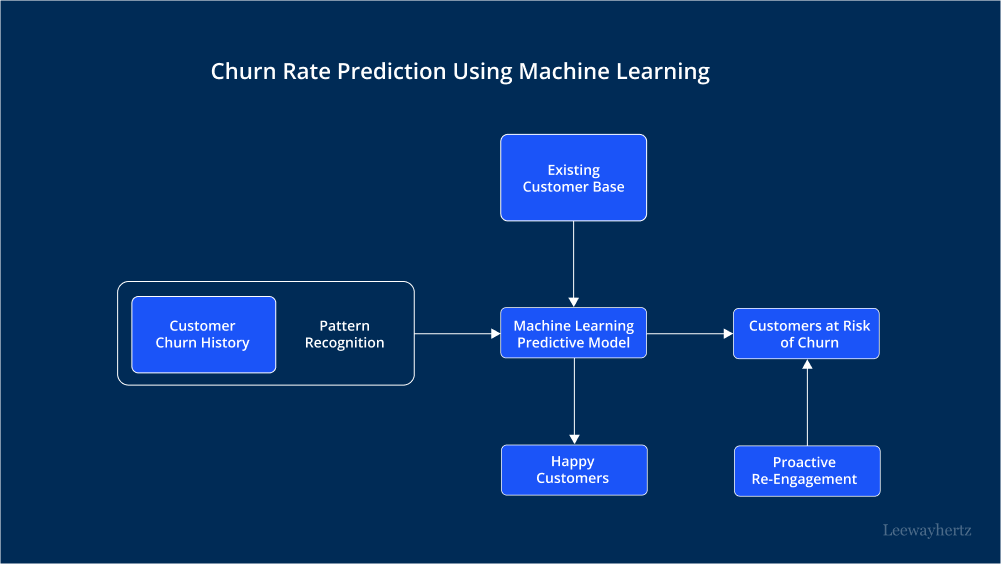
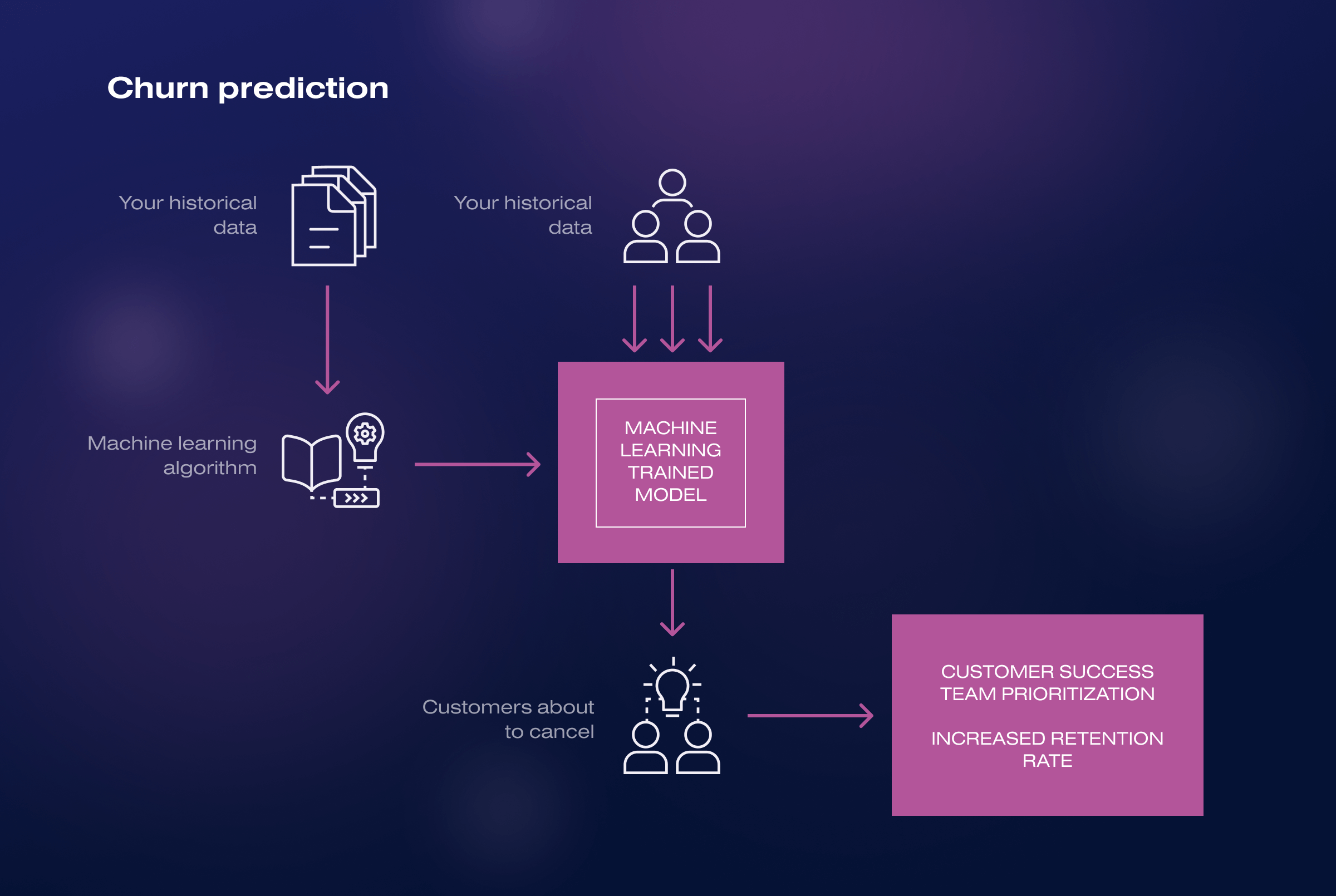
- Improved Customer Retention: One of the most critical applications of AI Customer Prediction Models is churn prediction. Proactive identification of at-risk customers allows for targeted interventions to prevent attrition. Businesses can offer personalized incentives, proactive customer support, or tailored communications to address potential issues before they impact the customer experience. This proactive problem-solving dramatically reduces churn rates, preserves valuable customer relationships, and significantly boosts customer lifetime value.
- Optimized Resource Allocation and Product Development: Accurate predictions about product adoption rates, demand forecasting for specific customer segments, or customer lifetime value enable more informed strategic decisions. This impacts inventory management, staffing levels, marketing budget allocation, and even future product development roadmaps. Businesses can focus R&D efforts on features or products that resonate most with their high-value segments, ensuring market relevance and minimizing development risks.
- Gaining Competitive Edge: Ultimately, businesses that effectively harness AI Customer Prediction Models gain a significant, sustainable competitive advantage. They can anticipate market shifts, respond to customer needs faster and more accurately, and operate with a level of insight and precision that reactive, traditional approaches cannot match. This allows them to outperform competitors, capture larger market shares, and innovate at a faster pace in an increasingly data-driven and customer-centric marketplace.
Comparative Insight: AI Customer Prediction Platforms vs. Traditional Data Systems
To fully appreciate the revolution brought about by AI support for building customer prediction models, it’s essential to compare modern AI platforms with traditional data infrastructure, such as data lakes and data warehouses. While these traditional systems form the backbone of many analytical operations, they often fall short in the specialized, dynamic, and computationally intensive demands of advanced AI.
- Data Lakes: Traditional data lakes are excellent for storing vast amounts of raw, unstructured, and semi-structured data at scale and low cost. They offer unparalleled flexibility for various data types and serve as a massive repository for potential future use cases. However, data lakes typically lack the inherent capabilities for advanced feature engineering, automated model training, robust MLOps, and integrated governance needed for production-grade predictive models. Data quality within a raw data lake can be highly variable and, without proper data governance and cataloging layers, it can easily become a “data swamp,” making it incredibly challenging for data scientists to find, trust, and use relevant features efficiently for AI model development.
- Data Warehouses: Data warehouses excel in structured data storage, optimized for reporting, business intelligence (BI), and complex analytical queries. They enforce strong data quality and schema, making them reliable sources for aggregated historical data and descriptive analytics. While data warehouses are crucial for understanding past business performance and generating standard reports, they are generally not designed for the iterative, experimental, and computationally intensive workloads of machine learning model development, real-time inference, or the flexibility required for new feature generation. Their rigid schema can also hinder the exploration of new, diverse data types critical for innovative features in complex prediction models.
- AI Customer Prediction Platforms: In contrast, modern AI platforms are purpose-built to bridge these gaps and supercharge the development and deployment of predictive models. They often sit on top of or integrate seamlessly with existing data lakes and warehouses, extracting, transforming, and enriching data specifically for AI-driven tasks. Key differentiators that highlight their superior capabilities include:
- Specialized ML Tools: Native, integrated support for AutoML (automating model selection and hyperparameter tuning), feature stores (for managing and serving features), model registries (for versioning and tracking models), and comprehensive experiment tracking (for reproducibility and collaboration), which are largely absent or rudimentary in traditional systems.
- Dynamic Data Pipelines: Designed to handle both batch and streaming data for real-time predictions, enabling continuous model retraining and adaptive data processing that responds to evolving customer behaviors and market conditions.
- Scalable Compute Infrastructure: Leverages cloud-native architectures for on-demand, elastic scalability, providing the immense computational power required for training large-scale deep learning models and serving predictions at high velocity and low latency.
- Integrated Governance and MLOps: Provides a holistic suite of tools for robust model versioning, lineage tracking, performance monitoring (detecting data drift, concept drift), automated deployment, and model rollback capabilities, addressing the significant complexities of operationalizing AI at scale.
- Focus on Predictive and Prescriptive Outcomes: While traditional systems primarily provide descriptive (what happened) and diagnostic (why it happened) analytics, AI platforms are inherently designed to deliver prescriptive (what should be done) and predictive (what will happen) insights. This directly supports the creation and optimization of AI Customer Prediction Models, accelerating the realization of direct business value.
Thus, while data lakes and warehouses remain vital for foundational data storage and historical reporting, AI platforms provide the crucial layer of intelligence, automation, and specialized tooling needed to transform raw data into actionable, forward-looking customer predictions, accelerating the realization of transformative business value.
World2Data Verdict: The Imperative of Predictive AI
The era of reactive business decisions is drawing to a close. As data continues to proliferate and market competition intensifies, the ability to accurately anticipate customer behavior will define market leaders and determine long-term success. World2Data.com asserts that investing in a robust AI platform specifically designed for building and managing AI Customer Prediction Models is no longer merely an advantage but an organizational imperative. Businesses must prioritize platforms that offer end-to-end capabilities – from intelligent data ingestion and sophisticated feature engineering to automated model training, continuous MLOps, and comprehensive model governance. The future belongs to those who proactively leverage predictive AI to not only deeply understand their customers but also to actively shape their experiences, thereby securing lasting loyalty, driving sustainable growth, and maximizing long-term profitability in an increasingly data-centric and dynamic global marketplace.