

AI Generating Automated Insights for Enterprises: Unlocking Strategic Foresight with AI Automated Business Insight
Platform Category: Augmented Analytics Platform
Core Technology/Architecture: Machine Learning, Natural Language Processing (NLP), Cloud-Native SaaS
Key Data Governance Feature: Integration with Data Catalogs and Role-Based Access Control
Primary AI/ML Integration: Built-in proprietary ML algorithms for anomaly detection and trend analysis
Main Competitors/Alternatives: ThoughtSpot, Tableau, Microsoft Power BI, Sisense
In an era defined by data proliferation, the ability to extract meaningful, actionable intelligence from vast datasets has become the cornerstone of competitive advantage. AI Generating Automated Insights for Enterprises is rapidly transforming the landscape of business intelligence, moving beyond traditional analytics to provide actionable foresight. The demand for robust AI Automated Business Insight is surging as organizations across sectors recognize its potential to unlock unprecedented value from vast and complex data streams. This technological leap enables businesses to not only understand their past but to intelligently predict and shape their future.
Introduction: The Dawn of Intelligent Business Foresight
The relentless pace of modern business necessitates decisions that are not only data-driven but also future-proof. Traditional business intelligence (BI) tools, while powerful for retrospective analysis, often fall short in providing the proactive, predictive capabilities enterprises now desperately need. This is where AI truly shines, heralding a new era of augmented analytics. By leveraging advanced machine learning models, natural language processing, and scalable cloud infrastructures, enterprises can now benefit from AI that generates automated insights, turning raw data into strategic assets at an unprecedented speed.
The objective of this deep-dive analysis is to explore the technical underpinnings, operational benefits, and strategic implications of integrating AI Automated Business Insight solutions within enterprise environments. We will dissect how these platforms function, compare them against traditional approaches, identify common challenges, and ultimately, cast a vision for their indispensable role in shaping future enterprise intelligence. The goal is to equip decision-makers with a comprehensive understanding of how to harness AI for truly intelligent, automated business foresight.
Core Breakdown: Architecture and Mechanism of AI Automated Insight Generation
The journey from raw data to automated business insight is a sophisticated orchestration of various AI and data engineering components. At its heart, an effective AI-powered insights platform relies on a robust architecture designed for scale, speed, and accuracy. This architecture typically comprises several critical layers, each playing a pivotal role in the discovery and delivery of actionable intelligence.
Data Ingestion and Pre-processing
The foundation begins with ingesting diverse data types from myriad sources – transactional databases, customer relationship management (CRM) systems, enterprise resource planning (ERP) systems, IoT devices, social media feeds, and external market data. This raw data often arrives in disparate formats, requiring extensive pre-processing. This stage involves data cleaning, normalization, transformation, and enrichment, ensuring data quality and consistency, which are paramount for generating reliable insights. Cloud-native SaaS platforms offer flexible ingestion pipelines capable of handling petabytes of information.
Feature Engineering and Management
While not a “Feature Store” in the traditional MLOps sense for model serving, the process of feature engineering is critical. Here, raw data attributes are transformed into meaningful features that machine learning models can understand and learn from. This might involve creating composite metrics, time-series aggregations, or categorical encodings. Effective feature management ensures reusability and consistency of these engineered features across different insight-generating models, improving efficiency and reducing redundancy in data preparation for analytical tasks.
Machine Learning & NLP Engine
This is the brain of the operation. Proprietary ML algorithms are deployed for a multitude of tasks:
- Anomaly Detection: Identifying unusual patterns or outliers that could signify fraud, operational issues, or emerging threats/opportunities.
- Trend Analysis and Forecasting: Predicting future market movements, sales figures, customer demand, or resource needs based on historical data.
- Segmentation and Clustering: Grouping customers, products, or operational units based on shared characteristics to reveal underlying patterns.
- Root Cause Analysis: Automatically identifying the underlying factors contributing to specific business outcomes or problems.
- Natural Language Processing (NLP): Analyzing unstructured text data (customer reviews, support tickets, internal documents) to extract sentiment, topics, and entities, providing qualitative insights often missed by numerical analysis.
These algorithms continuously learn and adapt, refining their predictive power with every new data point, making the AI Automated Business Insight increasingly accurate and relevant.
Insight Generation and Delivery
Once patterns and predictions are identified, the system generates insights. These are not merely raw data points but interpretative explanations of what the data means, why it matters, and what actions can be taken. Often, these insights are presented in an easy-to-understand format, such as natural language summaries or interactive dashboards, designed for executive consumption. Integration with data catalogs and role-based access control ensures that the right insights reach the right stakeholders securely and efficiently.
Challenges and Barriers to Adoption
Despite the immense potential, the journey to fully embrace AI-generated automated insights is fraught with challenges:
- Data Quality and Governance: Poor data quality, inconsistency, and lack of clear governance frameworks can severely undermine the accuracy and reliability of insights. The “garbage in, garbage out” principle holds strong.
- Explainability and Trust: Many advanced AI models (e.g., deep learning) are black boxes. Businesses need to understand *why* an AI generated a particular insight to trust it, especially for high-stakes decisions.
- Data Drift and Model Decay: The underlying patterns in business data are not static. Market conditions, customer behavior, and operational processes evolve, leading to data drift. AI models must be continuously monitored, retrained, and updated to maintain their relevance and accuracy, adding to MLOps complexity.
- Integration Complexity: Integrating a new AI insights platform with existing legacy systems, data lakes, and warehouses can be technically challenging and time-consuming.
- Talent Gap: A shortage of data scientists, ML engineers, and AI-literate business analysts can hinder effective deployment and utilization of these sophisticated platforms.
- Ethical Considerations: Ensuring fairness, transparency, and avoiding algorithmic bias in automated insights is crucial, especially when dealing with customer or employee data.
Addressing these barriers requires a holistic strategy encompassing technology, people, and processes.
Business Value and ROI
The return on investment (ROI) from implementing AI Generating Automated Insights for Enterprises is multifaceted and profound:
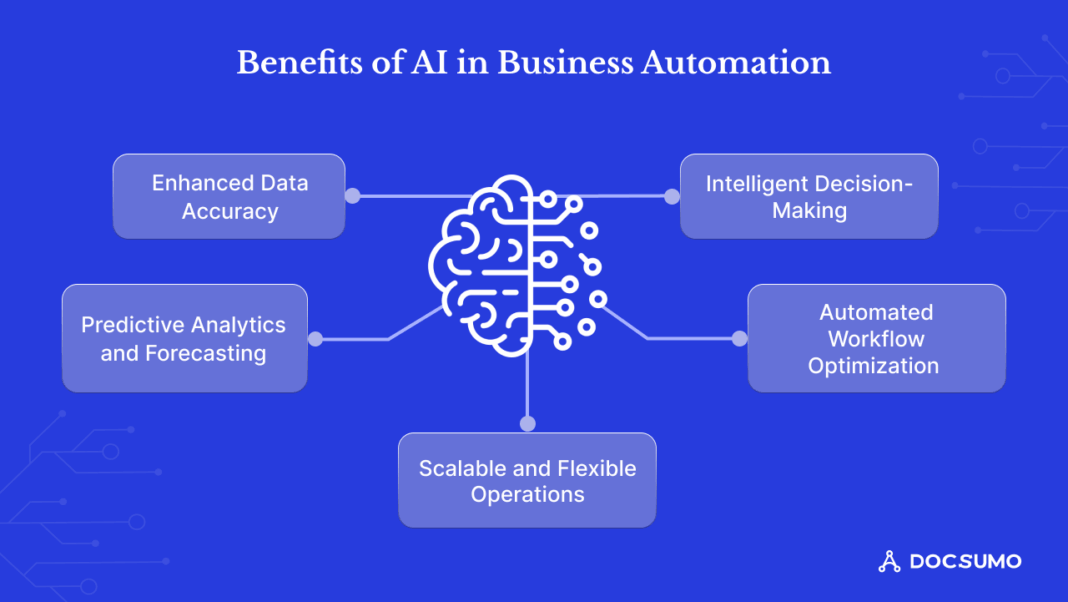
- Faster, Smarter Decision-Making: Executives and operational teams gain real-time access to actionable insights, enabling quicker responses to market changes, operational issues, and emerging opportunities. This agility translates directly into competitive advantage.
- Optimized Operations and Cost Reduction: AI can identify inefficiencies, predict equipment failures, optimize supply chains, and streamline resource allocation. This leads to significant cost savings, reduced waste, and improved operational throughput.
- Enhanced Customer Experience and Personalization: By understanding customer behavior and preferences at a granular level, businesses can deliver highly personalized products, services, and marketing campaigns, fostering loyalty and driving revenue growth.
- Proactive Risk Management: Anomaly detection and predictive analytics allow organizations to identify potential risks (e.g., fraud, compliance breaches, market downturns) before they escalate, enabling proactive mitigation strategies.
- Innovation and New Revenue Streams: AI can uncover hidden correlations and patterns, leading to the identification of new market segments, product development opportunities, and innovative business models.
- Improved Data Quality for AI: The continuous feedback loop inherent in these systems often leads to better data governance practices and improved data quality over time, serving as a virtuous cycle for further AI advancements.
In essence, AI Automated Business Insight transforms data from a mere record of the past into a powerful tool for shaping the future.

Comparative Insight: AI Automated Insights vs. Traditional Data Lakes and Warehouses
The evolution from traditional data infrastructure to intelligent insight generation represents a significant paradigm shift. While data lakes and data warehouses remain foundational elements for data storage and management, their primary function is to collect, store, and organize data. The burden of analysis, interpretation, and insight extraction largely falls upon human analysts, who use Business Intelligence (BI) tools (like Tableau or Power BI) to query and visualize this data.
Traditional data warehousing excels at structured data analysis, enabling reporting and dashboarding based on predefined queries. Data lakes, offering flexibility for unstructured data, allow for more exploratory analysis but often require significant data engineering effort and specialized skills to derive value. Both systems are excellent at answering “what happened?” and “how many?” questions. However, they are inherently reactive, requiring a human to pose the right questions and interpret the results.
In contrast, an AI Automated Business Insight platform goes several steps further. It leverages the data stored in lakes and warehouses but adds an intelligent layer of automated discovery. Instead of waiting for a human to ask, “Why are sales down?”, the AI platform proactively identifies the anomaly (sales down) and often, the underlying drivers (e.g., “sales are down in region X due to competitor Y’s new product launch, primarily affecting product category Z”). It moves from descriptive and diagnostic analytics to predictive and prescriptive analytics.
Key differentiating factors include:
- Proactiveness vs. Reactiveness: AI insights are often pushed to users, highlighting critical trends or anomalies without explicit queries. Traditional BI requires active pulling of reports.
- Automated Discovery: AI can uncover hidden patterns, correlations, and causal relationships that human analysts might miss due to cognitive biases or the sheer volume of data.
- Predictive Capabilities: AI platforms are built to forecast future outcomes, allowing businesses to anticipate challenges and opportunities. Traditional BI is primarily historical.
- Natural Language Interaction: Many modern AI insight platforms offer natural language query (NLQ) capabilities, democratizing data access beyond technical users.
- Continuous Learning: AI models continuously adapt and improve over time as new data becomes available, making the insights more refined and accurate.
While traditional data infrastructure provides the raw material, AI automated insights provide the sophisticated machinery to automatically refine that material into high-value intelligence, democratizing advanced analytics and empowering a broader range of business users to make data-driven decisions.
World2Data Verdict: The Imperative for Integrated Intelligence
The trajectory of enterprise analytics is unmistakably heading towards greater automation and intelligence. World2Data.com asserts that embracing AI Generating Automated Insights for Enterprises is no longer an optional enhancement but a strategic imperative for survival and growth in the hyper-competitive global marketplace. The sheer volume and velocity of modern data make purely human-driven analysis insufficient to extract maximum value or maintain agility.
Our recommendation is for enterprises to move beyond siloed data strategies and invest in integrated augmented analytics platforms. Prioritize solutions that offer robust data governance, explainable AI capabilities, and seamless integration with existing data ecosystems. Focus not just on the technology, but equally on cultivating an AI-literate workforce and establishing agile MLOps practices to manage the lifecycle of insight-generating models. The future lies in a symbiotic relationship between human expertise and machine intelligence, where AI Automated Business Insight acts as a force multiplier for strategic decision-making. Organizations that successfully weave AI into the fabric of their daily operations will be the ones that not only navigate the future but actively shape it, achieving unparalleled efficiency, innovation, and customer satisfaction.