


Unleashing Potential: How GenAI is Revolutionizing the Data Analysis Workflow
The advent of Generative AI (GenAI) marks a pivotal moment in the evolution of data analytics, fundamentally reshaping the entire GenAI Data Analysis Workflow. This transformative technology is moving beyond simple automation, empowering analysts and business users alike to interact with data in profoundly new ways. By democratizing access to complex insights and significantly accelerating every stage of the data lifecycle, GenAI promises an era of unprecedented efficiency, accuracy, and innovation in decision-making.
Introduction: The Dawn of AI-Augmented Analytics
How GenAI is Changing the Data Analysis Workflow is a transformative question many professionals are grappling with today, as Generative AI fundamentally redefines how we interact with and interpret vast datasets. The traditional, often painstaking steps of data analysis are being reshaped, ushering in an era of unprecedented efficiency and insight across the GenAI Data Analysis Workflow.
At its core, GenAI-driven data analysis falls under the Platform Category of AI-Augmented Analytics, designed not to replace human intellect but to amplify it. The Core Technology/Architecture typically involves Large Language Models (LLMs) deployed on top of existing data stacks, enabling natural language interactions with complex data systems. This powerful integration empowers users to query, analyze, and visualize data using plain English, drastically lowering the barrier to entry for advanced analytical tasks. Our objective here is to deep-dive into the multifaceted ways GenAI is transforming the data analysis landscape, exploring its architectural implications, its unparalleled business value, and the new challenges and opportunities it presents for organizations worldwide.
Core Breakdown: Deconstructing the GenAI Data Analysis Workflow
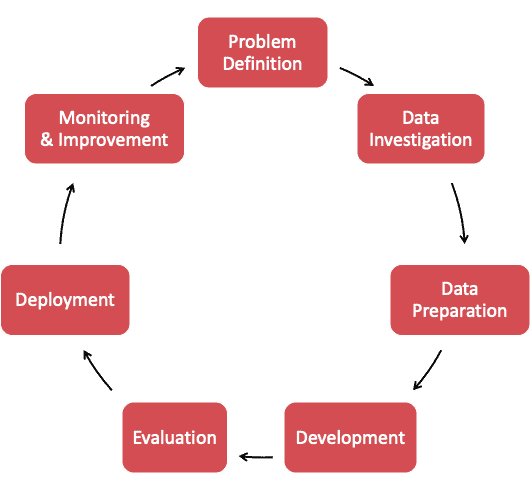
The integration of GenAI permeates every facet of the data analysis pipeline, from initial data ingestion to the final presentation of insights. It introduces intelligent automation, predictive capabilities, and novel interaction paradigms that redefine the traditional GenAI Data Analysis Workflow.
Automating Complex Data Preparation and Feature Engineering
One significant shift involves automating complex data preparation. GenAI tools can now intelligently clean and transform raw data, identifying and correcting inconsistencies, missing values, and outliers with remarkable accuracy. This extends to advanced feature engineering, where the AI can suggest or even create new, relevant data features, significantly reducing manual effort and accelerating the journey from raw data to actionable insights. For instance, an LLM might analyze sales transaction data and suggest creating a ‘customer lifetime value’ feature by combining purchase history, frequency, and recency, or automatically impute missing values based on contextual understanding of the dataset. This not only saves countless hours but also uncovers subtle patterns that might escape human analysts, leading to richer, more predictive models. Furthermore, a critical aspect integrated into this stage, especially for sensitive datasets, is the Key Data Governance Feature of Automated Data Classification and Masking. GenAI can intelligently identify Personally Identifiable Information (PII) or other sensitive data, applying masking or anonymization techniques dynamically, ensuring compliance and data privacy without manual oversight.
Enhancing Exploratory Data Analysis (EDA) and Visualization
The field of exploratory data analysis (EDA) is also being profoundly enhanced. Analysts can leverage GenAI for interactive querying, posing complex questions in natural language and receiving immediate, insightful responses and data snippets. This Natural Language to SQL (NL-to-SQL) Generation is a Primary AI/ML Integration that revolutionizes how users interact with databases. Instead of writing complex SQL queries, a user can simply ask, “Show me the average sales by region for the last quarter,” and the GenAI model will translate this into the appropriate SQL, execute it, and present the results. Furthermore, the technology excels at visualization generation, automatically creating diverse and appropriate charts, graphs, and dashboards based on user prompts or identified patterns, making data interpretation far more intuitive. This capability allows for rapid hypothesis testing and visual exploration, enabling analysts to uncover trends and outliers far more quickly than traditional methods.
Accelerating Model Development and Deployment
Accelerating the crucial model development phase is another core impact on the GenAI Data Analysis Workflow. GenAI can generate functional code for various aspects of machine learning model building, from initial script development to sophisticated pipeline creation. It also streamlines hyperparameter tuning, intelligently exploring optimal configurations to improve model performance without extensive manual experimentation, pushing the boundaries of what models can achieve. This capability extends to automatically suggesting appropriate model architectures for specific problems, drafting training scripts, and even assisting in the deployment process by generating MLOps pipeline components. The entire model lifecycle, from data ingestion to monitoring in production, benefits from GenAI’s ability to automate and optimize, leading to faster iteration cycles and more robust machine learning solutions.
Democratizing Access to Insights and Fostering Data Literacy
Democratizing access to insights represents a revolutionary change. The technology enables the creation of accessible, narrative-driven reports directly from complex data, translating intricate findings into understandable language for a broader audience. User-friendly interfaces are emerging, empowering non-technical stakeholders to extract valuable information and make data-driven decisions independently, fostering a culture of informed action across organizations. Imagine a marketing manager asking a GenAI system for a summary of campaign performance last month, receiving not just numbers but a coherent narrative explaining key trends, anomalies, and potential recommendations. This shift empowers every employee to be a data user, breaking down silos and accelerating decision-making across all levels of an enterprise.
Shifting Roles and Responsibilities of Data Professionals
Ultimately, this evolution is shifting the fundamental roles of human data professionals. Analysts are increasingly moving away from repetitive, manual data manipulation tasks. Their focus is elevating towards strategic thinking, interpreting AI-generated insights, and posing more complex business questions. This also involves critical oversight, ensuring ethical considerations and the accuracy of AI-driven analysis, recognizing that human expertise remains invaluable in guiding and validating the powerful capabilities of GenAI. Data scientists will spend less time on boilerplate code and more on novel algorithm development and complex problem-solving. Data engineers will focus on building robust, scalable data pipelines that can feed these AI systems, rather than on ad-hoc scripting.
Challenges and Barriers to Adoption in the GenAI Data Analysis Workflow
While the benefits are profound, integrating GenAI into the existing GenAI Data Analysis Workflow is not without its hurdles. One significant challenge lies in ensuring data quality and governance. GenAI models are highly sensitive to the quality and bias present in their training data; “garbage in, garbage out” becomes even more critical. Organizations must invest in robust data lineage, validation, and monitoring systems to prevent the propagation of errors or biased insights. Another barrier is the complexity of MLOps (Machine Learning Operations) for GenAI. Managing, deploying, and continually retraining large language models at scale requires sophisticated infrastructure and expertise. Ensuring model interpretability, especially for ‘black box’ GenAI models, poses another challenge, making it difficult to fully trust and explain AI-driven recommendations. Ethical considerations, such as fairness, privacy, and the potential for misuse, also demand careful attention and robust governance frameworks. Finally, the skill gap in the workforce is a considerable hurdle; organizations need to upskill their existing talent and attract new expertise in prompt engineering, AI governance, and advanced machine learning to fully leverage GenAI capabilities.
Business Value and ROI of the GenAI Data Analysis Workflow
Despite the challenges, the return on investment (ROI) for adopting GenAI in the data analysis workflow is compelling. Organizations can anticipate significant gains in operational efficiency, as repetitive tasks are automated and insights are generated faster. This translates into quicker time-to-market for new products and services, more agile responses to market changes, and enhanced competitive advantage. Improved data quality, driven by AI-powered cleansing and feature engineering, leads to more accurate models and better decision-making. The democratization of data access empowers more employees to make data-driven decisions, fostering a more informed and agile organization. Furthermore, GenAI can unlock entirely new analytical capabilities, enabling businesses to derive insights from unstructured data, perform advanced forecasting, and personalize customer experiences at an unprecedented scale. This can lead to increased revenue, reduced costs, and a substantial boost in innovation across the enterprise, making the investment in the GenAI Data Analysis Workflow a strategic imperative.

Comparative Insight: GenAI-Powered vs. Traditional Data Analysis
To fully appreciate the transformation brought by GenAI, it’s essential to compare its capabilities against the Main Competitors/Alternatives: Traditional BI Tools and Manual Data Analysis. Traditional data analysis workflows, often reliant on SQL queries, spreadsheets, and fixed dashboards, are inherently labor-intensive and require specialized technical skills. Data analysts spend a significant portion of their time on data extraction, transformation, and loading (ETL), followed by manual creation of reports and visualizations. Insights generated from this process are often retrospective and limited by the predefined scope of the queries or dashboards.
Data Lakes and Data Warehouses, while powerful for storing vast quantities of structured and unstructured data, still require significant human intervention for processing and analysis. Analysts need to understand complex data models, write intricate queries, and manually stitch together information from disparate sources. This often creates bottlenecks, slows down insight generation, and limits the accessibility of data to a select few technical experts within an organization.
In contrast, the GenAI Data Analysis Workflow flips this paradigm. Instead of pulling data from static reports, users engage in dynamic, natural language conversations with their data. The barrier to entry for complex analysis is dramatically lowered, as LLMs translate intent into actionable data operations. Data preparation is largely automated, reducing human error and accelerating the cycle from raw data to insights. Visualization is no longer a painstaking manual process but an on-demand, AI-generated output. Predictive modeling becomes more accessible and efficient, with GenAI assisting in every step from feature engineering to hyperparameter tuning and even code generation.
The key differentiator lies in interactivity, speed, and democratization. GenAI empowers business users, who might not have a strong technical background, to ask sophisticated questions and receive immediate, understandable answers, fostering a truly data-driven culture. This shift moves organizations from a reactive, report-centric approach to a proactive, insight-driven paradigm, where decisions are informed by real-time, contextually rich intelligence generated almost instantly by AI.

World2Data Verdict: Embracing the Intelligent Data Future
The integration of Generative AI into the data analysis workflow is not merely an incremental improvement; it represents a fundamental re-architecture of how businesses interact with and derive value from their data. World2Data.com asserts that organizations which proactively embrace and strategically implement GenAI will unlock unparalleled competitive advantages. The shift towards AI-augmented analytics, powered by LLMs on existing data stacks, is poised to democratize insights, accelerate innovation, and significantly enhance operational efficiency. While challenges in data governance, MLOps complexity, and ethical considerations must be diligently addressed, the overwhelming business value and transformative potential make GenAI an indispensable component for any forward-thinking data strategy. Our recommendation is clear: invest in upskilling your workforce, prioritize robust data governance frameworks, and strategically integrate GenAI capabilities across your entire GenAI Data Analysis Workflow to secure a future where data-driven decisions are made faster, smarter, and by everyone.