


Data Portability: Empowering Users with Control Over Their Information
- Platform Category: Data Privacy Management Platforms, Cloud Data Management Services
- Core Technology/Architecture: Standardized APIs (e.g., RESTful APIs), Open Data Formats (e.g., JSON, CSV, XML), Interoperability Standards
- Key Data Governance Feature: Data Subject Access Request (DSAR) automation, Data Export functionality, Consent Management
- Primary AI/ML Integration: AI for data discovery and classification of personal data, AI-driven anonymization and pseudonymization
- Main Competitors/Alternatives: Data Privacy Management software (e.g., OneTrust, TrustArc, BigID), Cloud providers’ native data export tools (e.g., AWS S3 Export, Google Cloud Storage Transfer Service)
Data Portability: Giving Users Control Over Their Information is rapidly becoming a fundamental aspect of digital rights. It signifies the ability for individuals to obtain their personal data from one service provider and transmit it to another. This concept empowers users, shifting the paradigm from companies owning data to individuals having true agency over their digital footprint. Embracing Data Portability is not merely a compliance checkbox but a strategic move towards a more transparent and user-centric digital economy.
Introduction: The Imperative of Data Portability in the Digital Age
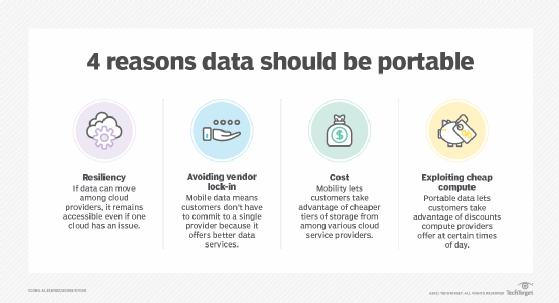
In an increasingly interconnected world, where individuals interact with countless digital services daily, the volume of personal data generated is immense. This data, ranging from browsing history and purchase records to location information and communication logs, is often held in silos by various service providers. Historically, moving this data between platforms was a cumbersome, if not impossible, task, leading to what is commonly known as ‘data lock-in.’ This situation significantly limited user choice and stifled competition, as the effort required to switch services outweighed the potential benefits.
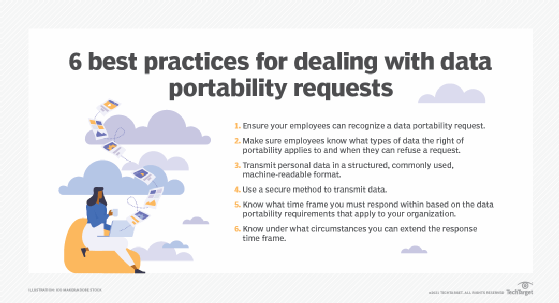
The concept of Data Portability has emerged as a crucial countermeasure to this challenge. Mandated by regulations like the GDPR in Europe and similar privacy frameworks globally, it grants individuals the right to receive their personal data in a structured, commonly used, and machine-readable format, and to transmit that data to another controller without hindrance. This right is not just about data access; it’s about empowering users with genuine control over their digital identity and fostering a more competitive and innovative digital marketplace. For World2Data.com, understanding and facilitating Data Portability is central to our mission of promoting intelligent data management and user empowerment.
Core Breakdown: Architecting for User Data Empowerment
Achieving true Data Portability requires a robust technical and architectural foundation, extending beyond mere data export functionalities. It involves a systemic approach to data management, emphasizing interoperability, standardization, and secure transfer mechanisms. This section delves into the critical components and considerations that underpin effective data portability.
Technical and Architectural Foundations for Data Portability
The bedrock of effective Data Portability lies in its technical implementation. Data must be made available in a format that is not only accessible but also usable by diverse systems. This necessitates:
- Standardized APIs (e.g., RESTful APIs): These interfaces are critical for programmatic access and transfer of data. By adhering to widely accepted protocols like REST, service providers can expose endpoints that allow users (or third-party services authorized by users) to request and receive their data in a structured manner. OAuth 2.0 or similar authorization frameworks are essential to ensure secure and controlled access.
- Open Data Formats (e.g., JSON, CSV, XML): Proprietary data formats are the antithesis of portability. Data must be exportable in formats that are universally parseable and do not require specific vendor software. JSON is particularly popular due to its human-readability and widespread support in web applications, while CSV remains a staple for tabular data. XML, though less common for new web services, still holds relevance in enterprise systems.
- Interoperability Standards: Beyond simple formats, true portability requires semantic interoperability. This means data isn’t just transferred as raw bytes but is understood and correctly interpreted by the receiving system. Industry-specific standards, schemas, and taxonomies (e.g., for health records, financial transactions) are vital here. Efforts like the Data Transfer Project, an open-source initiative, aim to create common data formats and transfer mechanisms to facilitate seamless data movement between services.
Key Data Governance Features for Portability
Technical enablement must be coupled with strong data governance features to ensure compliance and user trust:
- Data Subject Access Request (DSAR) Automation: Regulations like GDPR mandate that individuals can request copies of their personal data. Robust platforms for Data Privacy Management offer automated workflows for handling DSARs, including data discovery, collection, review, and secure delivery. This reduces the manual burden on organizations and ensures timely compliance.
- Data Export Functionality: At its core, portability requires a reliable and user-friendly mechanism to export data. This could be a self-service portal where users can initiate exports, choose data subsets, and download files, or an API-driven solution for more automated transfers to other services.
- Consent Management: Central to data privacy, consent management ensures that data is only collected, processed, and shared with explicit user permission. When data is ported, the new service must also obtain appropriate consent, and the originating service must respect any withdrawal of consent related to data processing that impacts portability.
AI/ML Integration for Enhanced Data Portability
Artificial intelligence and machine learning play an increasingly important role in streamlining and securing Data Portability processes, especially for large and complex datasets:
- AI for Data Discovery and Classification of Personal Data: Before data can be ported, an organization must know what personal data it holds and where it resides. AI-driven data discovery tools can scan vast databases, documents, and unstructured data to identify personal identifiable information (PII) and sensitive personal data (SPD), classifying it for proper handling during export.
- AI-driven Anonymization and Pseudonymization: To facilitate portability while protecting privacy, especially in scenarios where only aggregated or de-identified data is needed, AI algorithms can perform anonymization and pseudonymization. These techniques transform personal data so that individuals cannot be identified directly, or only with significant effort, thus allowing for data sharing without compromising individual privacy.
Challenges and Barriers to Adoption of Data Portability
Despite its clear benefits, the widespread adoption and seamless implementation of Data Portability face several hurdles:
- Technical Complexity and Standardization: The sheer diversity of data types, structures, and systems across different service providers makes universal standardization a monumental task. While efforts like the Data Transfer Project are promising, achieving broad consensus and implementation remains a challenge. Legacy systems, in particular, often lack the architectural flexibility to support modern API-driven exports.
- Security Risks during Transfer: Moving sensitive personal data between systems inherently introduces security risks. Ensuring end-to-end encryption, robust authentication, and integrity checks during transfer is paramount to prevent data breaches or unauthorized access. The receiving platform must also demonstrate adequate security postures.
- Data Quality and Integrity: During transfer, there’s a risk of data corruption, loss of context, or inconsistencies. Ensuring that the ported data maintains its quality, completeness, and integrity for the receiving service is a significant technical and governance challenge.
- Lack of User Awareness and Education: Many users are still unaware of their right to Data Portability or how to exercise it. Educating individuals about these rights and simplifying the user experience for data export are critical for widespread adoption.
- Cost of Implementation for Businesses: For many organizations, particularly smaller ones, re-architecting their systems to support comprehensive data portability can be a significant investment in terms of time, resources, and technical expertise.
Business Value and ROI of Embracing Data Portability
While challenging, the strategic adoption of Data Portability offers substantial returns on investment for forward-thinking businesses:
- Enhanced User Trust and Loyalty: By transparently offering data portability, companies demonstrate a commitment to user rights and privacy, which builds trust. In an era of increasing privacy concerns, this trust can be a significant competitive differentiator, fostering stronger customer relationships and loyalty.
- Regulatory Compliance and Risk Mitigation: Proactive implementation of data portability mechanisms ensures compliance with stringent data protection regulations (e.g., GDPR, CCPA). This mitigates the risk of costly fines, legal disputes, and reputational damage associated with non-compliance.
- Fostering Innovation and a Competitive Edge: When users can easily move their data, it reduces switching costs and encourages competition. Businesses that offer superior services, rather than relying on data lock-in, will attract and retain users. It also enables new services to emerge that can leverage user-provided data, fostering a more dynamic and innovative digital ecosystem.
- Improved Data Management Practices: The internal effort to enable data portability often forces organizations to better understand their data assets, improve data governance, and standardize data formats. This internal discipline leads to better overall data quality and management.
- Data-Driven Product Development: For organizations that receive ported data (with user consent), it opens up opportunities for richer data insights, enabling more personalized services and targeted product development, assuming proper consent and privacy safeguards are in place.
Comparative Insight: Data Portability vs. Traditional Data Models
To fully appreciate the transformative potential of Data Portability, it’s essential to compare it against traditional data management paradigms, specifically the Data Lake and Data Warehouse models, and the proprietary systems that historically dominated the digital landscape.
Traditional Data Lakes and Data Warehouses
Data Lakes and Data Warehouses are enterprise-centric solutions designed for storing, processing, and analyzing vast amounts of organizational data. Data Warehouses excel in structured data for business intelligence, while Data Lakes handle diverse, unstructured data for advanced analytics and machine learning. However, their primary purpose is internal organizational insight, not individual user data control.
- Focus: Primarily on aggregating and analyzing data for business operations, reporting, and strategic decision-making. The user in this context is typically an internal analyst or a business unit, not the individual data subject.
- Control: Data within these systems is entirely under the control of the organization. While security and access controls are in place, the mechanisms for individual users to extract their specific data in a portable format are often an afterthought, if they exist at all.
- Format & Access: Data is stored in formats optimized for analytical queries (e.g., columnar storage in data warehouses, raw files in data lakes). While APIs might exist for internal consumption, external-facing APIs for granular user data export are rare and not natively integrated into their core architecture. Exporting individual data typically requires custom development or manual processes.
Proprietary Systems and Data Lock-in
Before the advent of strong data privacy regulations, many online services operated on a proprietary model where user data was inextricably linked to their platform. This created significant “data lock-in”:
- Data Ownership: The prevailing mindset was that the service provider ‘owned’ the data generated on their platform, even if it pertained to individual users.
- Lack of Interoperability: Data was stored in proprietary formats and accessible only through the service’s own interface or APIs designed for its specific ecosystem, not for external transfer.
- High Switching Costs: Users faced immense difficulty and often complete inability to migrate their data to a competing service. This lack of portability created a monopoly effect, where users were trapped due to the value accumulated in their data within a single platform.
How Data Portability Differs and Transforms
Data Portability fundamentally shifts the paradigm from these traditional, company-centric models to a user-centric one:
- User Sovereignty: It asserts that individuals have a right to their data, irrespective of where it is stored. The control resides with the data subject, not solely with the data controller.
- Openness and Interoperability: Instead of proprietary formats and closed systems, Data Portability demands open standards, standardized APIs, and machine-readable formats that facilitate seamless data exchange between disparate services.
- Empowered Competition: By lowering the switching costs associated with data migration, it encourages competition among service providers. Companies must compete on the merits of their service, innovation, and privacy practices, rather than holding users hostage with their own data.
- Architectural Shift: Implementing Data Portability requires organizations to rethink their data architecture. Instead of just ingesting and processing data for internal use, they must also design systems that can efficiently and securely extract and transmit individual data sets on demand. This often involves integrating with Data Privacy Management Platforms and leveraging core technologies like Standardized APIs and Open Data Formats.
While Data Lakes and Data Warehouses remain crucial for organizational analytics, they must now be augmented with robust data export and DSAR automation capabilities to fully comply with Data Portability requirements. The shift is not about replacing these systems but enhancing them with user-centric data control features, fundamentally changing how organizations perceive and manage personal data.

World2Data Verdict: The Future is Fluid Data
The journey towards universal Data Portability is complex but undeniably essential for a fair, competitive, and user-empowered digital future. World2Data.com believes that organizations can no longer afford to view data portability as a mere regulatory burden. Instead, it must be embraced as a strategic opportunity to build profound user trust, foster innovation, and future-proof their operations in an increasingly privacy-conscious world.
Our recommendation is clear: enterprises must proactively invest in architectural modernization that supports open standards and interoperable data formats. This includes adopting robust Data Privacy Management Platforms that integrate AI for data discovery and automated DSAR fulfillment. The future belongs to those who see data not as a static asset to be hoarded, but as a fluid resource that users should control. Organizations that champion Data Portability will emerge as leaders, attracting a new generation of users who demand transparency and control over their digital lives, ultimately driving long-term value and sustainable growth in the evolving digital economy.