


Unlocking Growth: Essential Segmentation Techniques Every Marketer Should Use
1. Platform Category: Customer Data Platform (CDP)
2. Core Technology/Architecture: Big Data Processing, Advanced Analytics Engines, Machine Learning Algorithms
3. Key Data Governance Feature: Consent Management, Role-Based Access Control, Data Lineage
4. Primary AI/ML Integration: Predictive Segmentation, Automated Segment Discovery, Look-alike Modeling
5. Main Competitors/Alternatives: Other CDPs (e.g., Segment, Tealium), Marketing Automation Platforms, Custom Data Warehouse/Lake Solutions
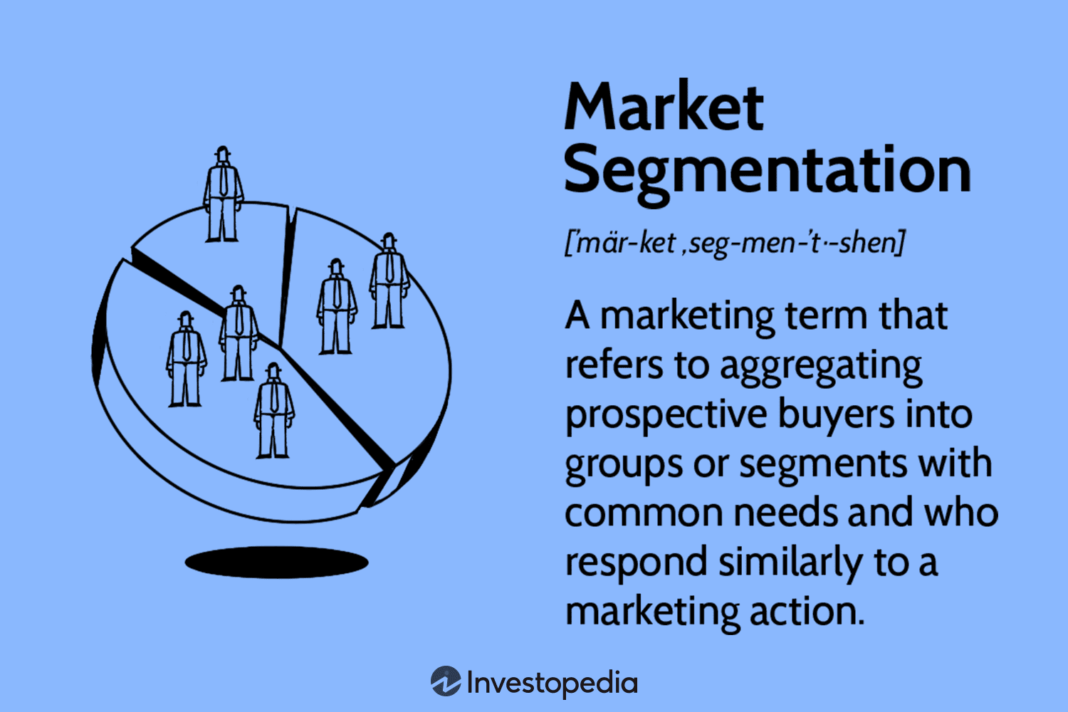
In today’s hyper-competitive digital landscape, generic marketing is a relic of the past. Effective customer segmentation is no longer a luxury but a fundamental necessity for any business aiming to connect meaningfully with its audience and drive tangible results. By dividing a broad target market into smaller, more defined groups based on shared characteristics, marketers can craft highly personalized messages, optimize campaign performance, and build stronger, more enduring customer relationships. This deep dive explores the core segmentation techniques and the underlying data platform strategies that empower modern marketers.
The Imperative of Customer Segmentation in Modern Marketing
The core objective of any marketing strategy is to reach the right person, with the right message, at the right time. Without robust segmentation, this ideal remains largely aspirational. Modern marketing demands precision, and precision is born from understanding. An effective segmentation strategy allows businesses to move beyond mass marketing, which often yields diminishing returns, towards targeted approaches that resonate deeply with specific customer needs and preferences. This not only enhances campaign effectiveness but also fosters a sense of being understood and valued by the customer, significantly boosting loyalty and lifetime value. World2Data.com emphasizes that leveraging a sophisticated Customer Data Platform (CDP) is pivotal in executing these advanced segmentation strategies, providing the unified customer view necessary for deep insights.
Core Breakdown: Advanced Segmentation Techniques and Their Platform Enablers
Effective segmentation is built upon a combination of analytical approaches, each providing a unique lens through which to view your customer base. While the principles remain constant, the tools and technologies available today, particularly Customer Data Platforms (CDPs), have revolutionized the depth and scalability of these techniques.
Understanding Your Audience Through Demographic Segmentation
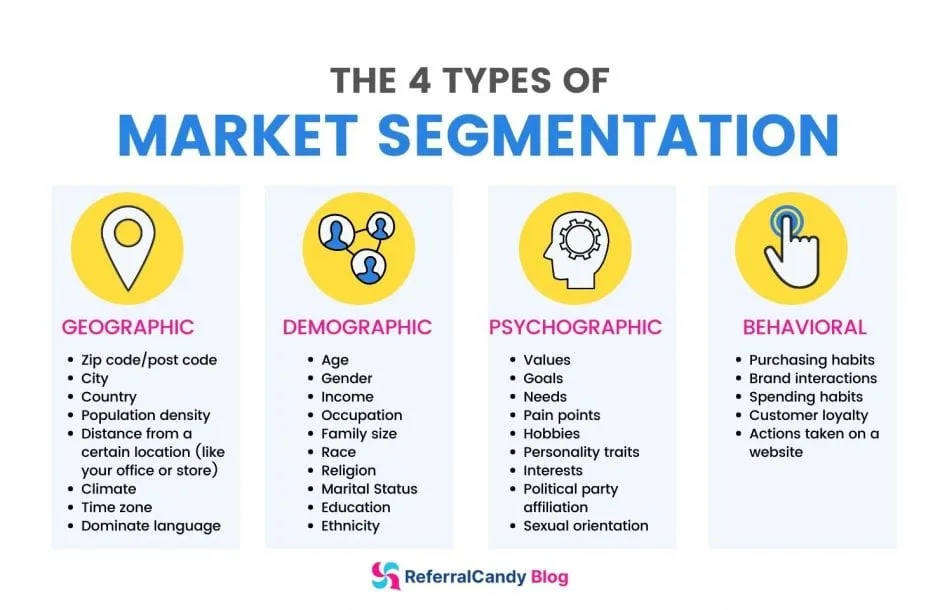
Demographic segmentation is the foundational approach, categorizing customers based on quantifiable attributes such as age, gender, income, education level, occupation, marital status, and family size. These characteristics offer a straightforward way to define broad customer groups, aiding in initial targeting and product development. For instance, a luxury car brand might target high-income individuals, while an educational service might focus on parents of school-aged children. While seemingly basic, when combined with other methods, demographic data provides crucial context. A CDP’s ability to consolidate demographic information from various sources (CRM, website forms, third-party data) ensures accuracy and completeness, forming the bedrock for more complex analyses.
Psychographic Segmentation for Deeper Insights
Moving beyond surface-level data, psychographic segmentation delves into the lifestyles, values, attitudes, interests, and personality traits of your target audience. This method seeks to understand the ‘why’ behind customer behavior. What are their beliefs? What motivates their purchasing decisions? How do they perceive the world, and how does this influence their brand choices? Understanding these intrinsic motivators enables marketers to craft emotional and aspirational messaging that connects on a more profound psychological level. For example, an eco-friendly brand would target individuals with strong environmental values. A CDP, powered by advanced analytics engines and machine learning algorithms, can infer psychographic segments by analyzing data points like social media activity, survey responses, content consumption patterns, and purchase history. Natural Language Processing (NLP) within these platforms can even analyze sentiment and themes from customer interactions, painting a richer psychographic picture.
Behavioral Segmentation: Actions Speak Louder
Behavioral segmentation focuses on how customers interact with your brand, products, or services. This is arguably the most powerful form of segmentation for predicting future actions and driving immediate engagement. Key behavioral data points include:
- Purchase History: Recency, Frequency, Monetary (RFM) analysis is a classic example.
- Website/App Usage: Pages viewed, time spent, features used, navigation paths, cart abandonment.
- Product Usage: How often a product is used, features utilized, subscription tier.
- Engagement Levels: Email open rates, click-through rates, social media interactions.
- Loyalty Status: Repeat purchases, participation in loyalty programs.
By understanding actual customer actions, marketers can identify loyal advocates, re-engage dormant customers, personalize product recommendations, and tailor promotional offers based on demonstrated interest. A CDP excels here, unifying all behavioral data points from across the customer journey into a single, comprehensive profile. Its big data processing capabilities handle the massive volume and velocity of this interaction data, making real-time behavioral segmentation possible. Machine learning, particularly predictive segmentation and automated segment discovery, plays a crucial role in identifying subtle patterns in behavior that indicate high-value customers or those at risk of churn.
Geographic Segmentation for Localized Impact
This technique segments the market based on physical location, whether it’s by country, region, city, or even neighborhood. Geographic segmentation is vital for businesses with a physical presence or those whose products and services are influenced by local climate, culture, or dialect. It allows for highly localized marketing campaigns, promotions, and product variations that are relevant to specific areas. For a global brand, understanding regional nuances in product preference or marketing channel effectiveness is critical. CDPs can enrich customer profiles with precise geographic data, often integrating with geo-location services and ensuring compliance with regional data privacy regulations like GDPR or CCPA through robust consent management.
Technographic Segmentation for B2B Precision
While less common in pure B2C, technographic segmentation is invaluable in B2B marketing. This involves segmenting companies based on the technology stack they use. Knowing which software, hardware, or services a potential client utilizes can help tailor product offerings and sales pitches more effectively. For instance, a company selling CRM integration tools would target businesses using specific CRM platforms. World2Data’s platform, with its advanced analytics, can facilitate the collection and analysis of such firmographic and technographic data, enabling highly precise B2B segmentation.
Challenges and Barriers to Advanced Segmentation Adoption
Despite the clear benefits, implementing sophisticated segmentation strategies is not without its hurdles. One primary challenge is **data fragmentation and quality**. Customer data often resides in disparate systems (CRM, ERP, website analytics, social media), leading to incomplete or inconsistent profiles. This makes it exceedingly difficult to build a single, unified customer view essential for effective segmentation. Without robust data lineage and integration capabilities, marketers struggle to trust their data.
Another significant barrier is the **complexity of MLOps (Machine Learning Operations)** for dynamic segmentation. While predictive segmentation offers immense value, deploying, monitoring, and maintaining machine learning models in production requires specialized skills and infrastructure. Data drift, where the underlying data patterns change over time, can quickly render static segments obsolete, necessitating continuous model retraining and adaptation. This often requires a dedicated data science team, which smaller organizations might lack.
**Privacy regulations and consent management** also present a growing challenge. As data privacy becomes paramount, marketers must ensure their segmentation practices comply with regulations like GDPR, CCPA, and others. Managing customer consent across various data points and ensuring role-based access control to sensitive information is crucial but complex to implement without the right data governance features. Furthermore, the sheer volume of data can be overwhelming, and extracting actionable insights from it requires advanced analytics engines that many traditional marketing tools simply do not possess.
Business Value and ROI of Sophisticated Segmentation
The return on investment (ROI) from adopting advanced segmentation techniques, particularly through a CDP, is substantial and multifaceted:
- Faster Model Deployment & Campaign Execution: By providing a unified, clean, and real-time data foundation, a CDP drastically reduces the time it takes to build, test, and deploy new segments for campaigns. Automated segment discovery and look-alike modeling, powered by AI, accelerate the identification of new target groups.
- Enhanced Data Quality for AI: A CDP acts as a “feature store” for AI and ML models, standardizing and centralizing customer attributes and behaviors. This ensures that the data fed to predictive segmentation algorithms is high-quality, consistent, and readily available, leading to more accurate and effective models. Data labeling, often a prerequisite for supervised learning, becomes more streamlined within such platforms.
- Improved Personalization at Scale: Segmentation enables personalized messaging and offers that resonate deeply with individual customers, leading to higher engagement rates, conversion rates, and customer satisfaction. This moves beyond basic personalization to truly context-aware interactions.
- Optimized Marketing Spend: By focusing resources on the most receptive customer segments, businesses can reduce wasted ad spend and achieve a higher return on their marketing investments. This means campaigns are not just more effective, but also more efficient.
- Increased Customer Lifetime Value (CLTV): Personalized experiences foster loyalty and reduce churn. When customers feel understood and valued, they are more likely to remain with a brand longer and increase their spending over time.
- Competitive Advantage: Companies that effectively leverage data for dynamic segmentation can react faster to market changes, identify emerging trends, and outmaneuver competitors who rely on static or less sophisticated approaches.
Ultimately, robust segmentation translates directly into stronger customer relationships, optimized resource allocation, and sustained business growth.
Comparative Insight: Modern CDP Segmentation vs. Traditional Approaches
The evolution of segmentation capabilities mirrors the broader advancements in data technology. Traditionally, marketers relied on rudimentary methods:
- Manual Segmentation: Often based on assumptions or small focus groups, these segments were static, prone to bias, and difficult to scale.
- Basic CRM Segmentation: CRMs offered some ability to filter customer lists based on contact fields, but lacked the ability to integrate diverse data sources or perform complex behavioral analysis.
- Data Warehouse/Data Lake Solutions (without CDP): While powerful for storing vast amounts of data, these often required significant IT involvement for data extraction, transformation, and loading (ETL) to create marketing-friendly segments. The agility and real-time capabilities were often limited.
- Marketing Automation Platform (MAP) Segmentation: MAPs provide good segmentation based on email engagement and website interactions, but typically struggle with unifying offline data, third-party data, or complex cross-channel behaviors.
In contrast, a modern Customer Data Platform (CDP) fundamentally transforms segmentation. A CDP provides a unified, persistent, and actionable customer profile by integrating data from all touchpoints – online, offline, first-party, second-party, and third-party. This “single source of truth” empowers marketers with:
- Holistic View: Segments are built on a complete picture of the customer, not just isolated data points.
- Dynamic & Real-time Segmentation: CDPs can update segments in real-time based on live customer behavior, allowing for immediate, relevant responses (e.g., triggering a special offer immediately after cart abandonment).
- AI/ML-Driven Segmentation: Leveraging advanced analytics and machine learning, CDPs can identify hidden patterns, predict future behavior (e.g., churn risk, next best action), and automatically discover new high-value segments that manual analysis would miss. This includes predictive segmentation, automated segment discovery, and look-alike modeling.
- Enhanced Data Governance: CDPs are built with features like consent management and role-based access control, ensuring compliance with privacy regulations while enabling sophisticated data use for segmentation.
- Marketing Usability: Unlike raw data lakes, CDPs are designed with the marketer in mind, providing intuitive interfaces for segment creation, activation, and analysis without heavy reliance on IT or data science teams.
The distinction lies in the CDP’s ability to provide a centralized, actionable source of truth for all customer data, enabling far more precise, dynamic, and intelligent segmentation than any traditional tool or isolated data repository.
World2Data Verdict: The Future of Dynamic Segmentation
The future of marketing success unequivocally lies in mastering dynamic, AI-powered segmentation, and the Customer Data Platform (CDP) stands as its indispensable backbone. World2Data.com advises organizations to prioritize investment in a robust CDP that unifies data, leverages machine learning for predictive insights, and offers flexible activation capabilities. The era of static customer groups is over; successful brands will be those that can continuously adapt their messaging and offers in real-time, based on evolving customer behaviors and preferences. Looking ahead, expect further advancements in prescriptive analytics, where CDPs won’t just tell you who your segments are, but precisely what action to take with each one for optimal outcomes. To remain competitive, marketers must embrace this data-driven paradigm, ensuring their segmentation strategies are as fluid and intelligent as the customers they aim to serve.